


Office Space Optimization That Starts With Real Data
You finished the space study six months ago. Since then, two teams have restructured, attendance has shifted, and a lease decision is now three months out. But you’re still basing your choices on what your business looked like half a year ago.
Disparities between a one-time measurement and the way the workplace is actually changing can mark the difference between the right investment and millions in unnecessary real estate costs. That’s why you need a continuous read on how the space is actually being used.
Here's what this guide covers:
- What office space optimization looks like when it runs on ongoing data instead of periodic snapshots
- How the measure, model, act, and re-measure loop works in practice
- The common pitfalls that undermine optimization efforts
Want to see how continuous occupancy data sharpens your optimization decisions?
See how VergeSense helps real estate leaders replace stale space studies with a continuous read on how offices are actually used.
What Is Office Space Optimization?
Office space optimization is the continuous process of aligning physical space with how people actually use it. That means adjusting the mix of workstations, meeting rooms, and neighborhoods based on real attendance and behavior patterns, not just headcount rosters or design assumptions.
But most organizations optimize once, then operate on assumptions until the next major lease event forces another round. That cycle leaves months or years of decisions without current data behind them.
Why Static Approaches Fall Short
A one-time study or consultant-led benchmark captures a moment, but once headcount changes, attendance patterns shift, or team structures reorganize, the study's conclusions start to lose relevance. A quarterly review built on a six-month-old dataset is really just an estimate.
Badge swipes from Q1 don't reflect the hybrid work policy that took effect in Q2. Booking data from before a restack doesn't account for teams that moved floors. Static approaches answer the question "what happened?" but can't answer "what's happening now?" or "what should we do next?"
What Continuous Optimization Looks Like
Continuous office space optimization replaces a one-off project with a living system. Ongoing measurement feeds scenario models that update as conditions change, so when attendance drops on a floor, the data shows it in days, not quarters. And when a team consolidation is proposed, the model quantifies what that means for office space utilization, capacity, and cost before anyone commits budget.
The process shifts from "study, decide, wait" to "measure, model, act, re-measure." Each decision sharpens the next because the feedback loop never stops.
How Office Space Optimization Actually Works in Practice
It seems simple enough to measure usage and then act on what you find. In practice, there's more operational complexity than teams expect. Below, we walk through the three stages, from measuring actual usage to modeling scenarios against it and re-measuring once the change takes place.
Measuring Actual Usage Across Space Types
No single data source tells the full story. Badge access data shows who entered the building but not where they sat. Room-booking systems show what was reserved but not whether the meeting actually happened. WiFi connections approximate headcount at the floor level but miss the desk level.
Effective measurement layers multiple inputs: badge data, booking systems, WiFi connections, videoconferencing usage, and occupancy sensors. When these sources are combined, utilization becomes visible at the desk, room, and floor level, with enough clarity to distinguish a full neighborhood from a half-empty one.
Importantly, organizations don't need to start from scratch with their sensor infrastructure. Platforms like VergeSense now support the ingestion of real-time data from third-party sensors, including hardware from Density, XY Sense, and Pointgrab, alongside VergeSense's own Infinity Area Sensors. That means organizations with existing sensor deployments can feed their current data into a unified platform without a rip-and-replace.
From Measurement to Scenario Modeling
Raw utilization data is just the starting point. The real value comes from converting patterns into forward-looking models and exploring scenarios like what would happen if you consolidate two floors or the cost impact of shifting from assigned desks to a neighborhood model.
Consolidation, expansion, and attendance-shift scenarios each produce different cost and capacity outcomes. Scenario modeling lets real estate leaders quantify tradeoffs with real data before committing capital, rather than leaning on intuition.
Acting on the Model, Then Re-Measuring
The optimization loop closes when the post-decision data feeds back into the model. You consolidate a floor, then measure whether the remaining floors absorbed the demand or created new pinch points. You shift to a neighborhood model, then track whether the neighborhoods are sized correctly for actual team behavior.
This re-measurement step separates optimization from reorganization and enables you to validate your changes.
Office Space Optimization With VergeSense
VergeSense approaches optimization through two connected capabilities: Occupancy Intelligence and Predictive Planning.
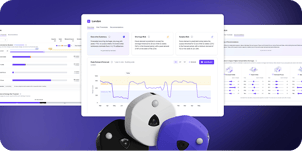
Occupancy Intelligence captures continuous utilization data across space types, combining the Infinity Area Sensor (wireless, battery-powered, with a ~10-year battery life and ~95% accuracy at the area level) with badge access data, WiFi connections, room-booking systems, videoconferencing data, and third-party sensors to complete the picture.
Meridian, The Workplace AI Platform, analyzes this data in the Large Spatial Model (LSM), trained on 250M+ sq ft of measured workplace data across 210+ enterprises in 50+ countries. Predictive Planning then models scenarios with a customer’s unique data: consolidation paths, expansion plans, and attendance-shift forecasts that quantify outcomes before budget moves.
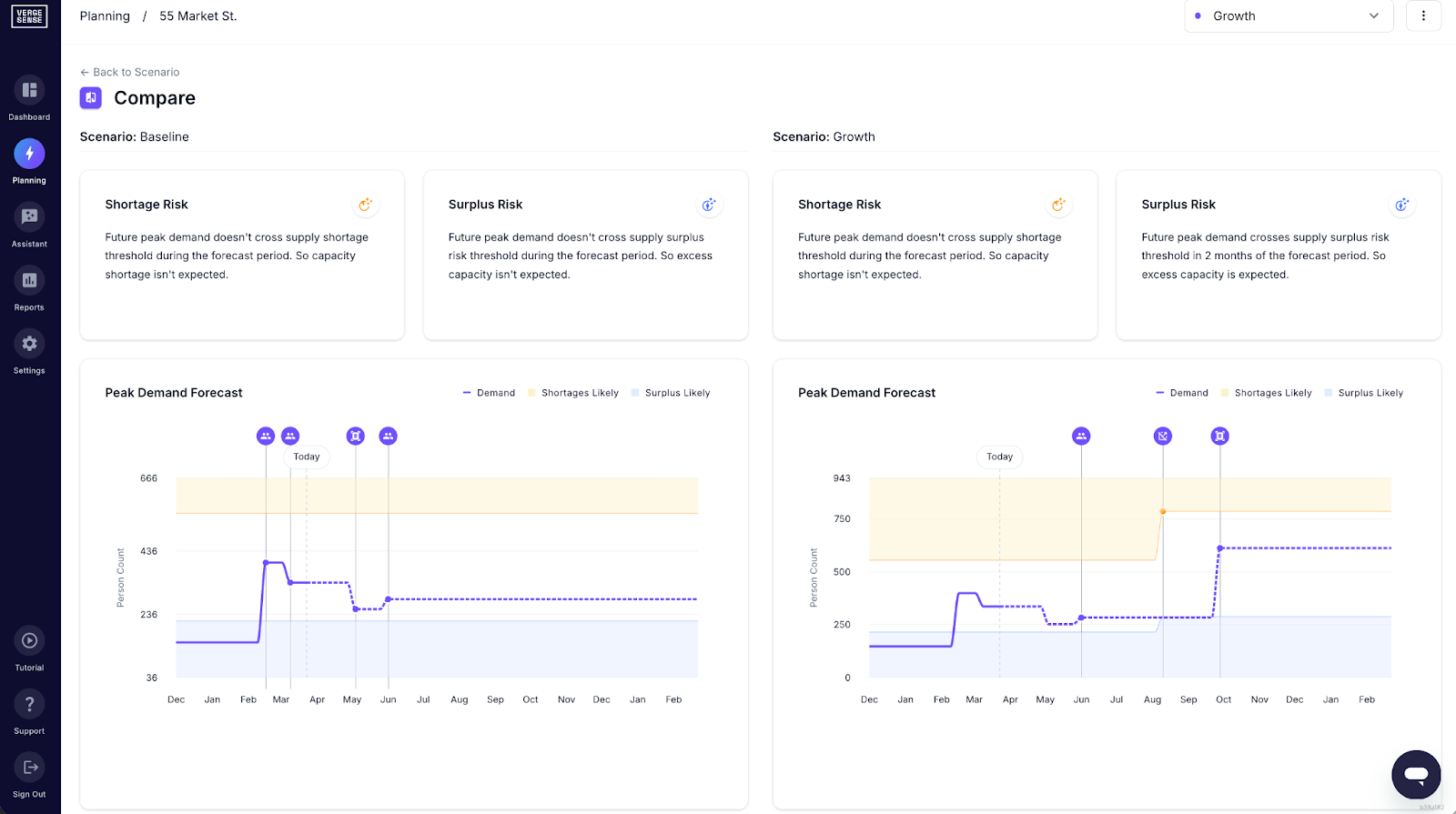
Where a traditional consulting engagement can run for weeks or months and carry six-figure costs, Meridian delivers scenario outputs in minutes. The difference matters most when decisions are time-sensitive, like a lease renewal or an RTO policy change that reshapes demand across the portfolio.
$1.5M in Avoided Buildout Costs: Cybersecurity Company
One cybersecurity company used VergeSense's continuous occupancy data and Predictive Planning capabilities to evaluate whether a proposed expansion was necessary. The data showed that existing space could absorb projected demand without additional buildout. The company saved $1.5M in buildout costs, a decision that was only possible with current utilization data feeding a forward-looking model.
For real estate leaders, the ability to catch the expansion you don't need before you sign the contract is the core value proposition of continuous optimization.
Looking for a data-backed approach to optimizing your office space?
See how VergeSense helps real estate leaders move from one-time studies to continuous space optimization.
Common Pitfalls in Office Space Optimization
Even organizations that invest in measurement can undermine their own optimization efforts. Three patterns show up repeatedly.
Treating Optimization as a One-Time Project
The most common pitfall is optimizing for a snapshot. A team runs a study, makes changes, and then doesn't revisit the data until the next lease event. Within a quarter, the plan can be out of step with actual behavior. Continuous measurement keeps the plan in step with how the space is actually used.
Relying on a Single Data Source
Badge data alone misses passive occupancy, and booking data alone misses no-shows, meaning you can’t see the desks and rooms that sit empty even though they’ve been reserved. Layered data sources catch what any single input misses, and platforms that ingest from multiple sensor types and systems combine this data automatically.
Optimizing for Averages Instead of Peaks and Patterns
Average utilization is a useful headline planning metric, but it masks the dynamics that drive real decisions. A floor with an average occupancy rate of 45% might hit 80% on Tuesdays and Wednesdays and sit at 15% on Fridays. Optimizing for the average means either over-building for the quiet days or under-serving the midweek crunch, which is why peak and pattern analysis gives more actionable insights.
Build a Continuous Office Space Optimization Process
Four steps take a team from scattered data to a decision they can defend.
- Audit your current data sources. What do you already collect (badge, booking, WiFi, sensors), and where are the gaps?
- Establish a utilization baseline. Even imperfect data across two to four weeks reveals the gap between assumed and actual usage.
- Identify the highest-cost space decision on the horizon. Connect measurement to a decision, whether that’s a lease renewal, buildout, or consolidation proposal.
- Close the loop. After acting, re-measure. The value of optimization compounds when each decision informs the next.
For organizations ready to move from episodic studies to a continuous system, VergeSense connects measurement and space planning in a single workflow. Explore what that looks like for your portfolio with a space management software comparison, or go deeper on how Predictive Planning works.
Want to see how continuous optimization works for your portfolio?
VergeSense turns occupancy data into scenario models that update as your workplace changes.
FAQs About Office Space Optimization
How Often Should Office Space Optimization Be Revisited?
How often you revisit optimization depends on how you measure. With continuous data, it runs in the background rather than as a scheduled exercise. Re-evaluate your scenario models whenever a material change hits: a lease event, a policy shift, a team restructure, or a clear shift in attendance.
Can Office Space Optimization Work Without Installing Sensors?
Office space optimization can work without sensors, up to a point. Badge data, booking systems, and WiFi connections provide a starting baseline. However, sensor data (including third-party sensors fed into a unified platform) adds the resolution needed for desk-level and room-level accuracy that other sources can't match.
What ROI Can Organizations Expect From Continuous Space Optimization?
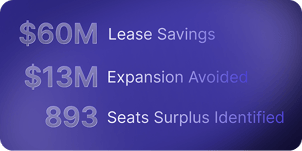
The ROI from continuous space optimization varies by real estate footprint and decision context. VergeSense customers have seen cost savings ranging from $1.5M in avoided buildouts to $60M in long-term lease savings, depending on the square footage involved and the nature of the optimization.
How Does Office Space Optimization Differ From a Workplace Redesign?
A workplace redesign changes the office layout itself, from furniture to floor plans and neighborhoods. Optimization changes how space is allocated and managed based on actual usage. Workplace design and optimization work go hand in hand. Optimization is the ongoing measurement and adjustment process that determines whether a redesign is needed and whether it worked afterwards.
.jpg)