

<img height="1" width="1" style="display:none;" alt="" src="https://px.ads.linkedin.com/collect/?pid=2274356&amp;fmt=gif">
Skip to content

NEW REPORT: The Self-Adapting Workplace, from VergeSense & WORKTECH Academy Download Now

The WORKPLACE AI PLATFORM

Meridian

Meridian turns the data you already have into space decisions you can defend, powered by AI trained on 250M+ square feet of real workplace behavior. All you need to start is a floorplan.


Building icon representing 250M+ square feet of workplace data
250M+

sq ft of real workplace data analyzed

Enterprise customer network icon
200+

enterprise
customers

World map icon showing global installations across 50+ countries
50+

countries
installed

Plug icon representing 50+ native data integrations
50+

native
integrations


the two layers

One Platform. Forecast What's Next. Measure What's Real.

Start with the occupancy data you already have. Every planning decision, from headcount shifts to lease commitments, backed by AI forecasts and real occupancy data.

The forecasting and decision layer

Test the Change Before You Commit to It

Weigh lease, design, headcount, and policy changes, and walk into the room with quantified trade-offs leadership will trust. Start with just a floor plan. No sensors required to begin.

Explore Predictive Planning

Demand Forecasting
Predict how offices respond to future change, so peak demand and shortages surface before they cost you.

Scenario Modeling
Weigh changes to cost and employee experience across supply (leasing, design) and demand (headcount, policy).

Space Supply Analysis
AI analysis of your floor plans and occupancy data finds the point where experience degrades: your true capacity.

Sharper Insights From Your Data
Connect video conferencing, badge, WiFi, and sensor data to turn signals you already have into confident decisions.
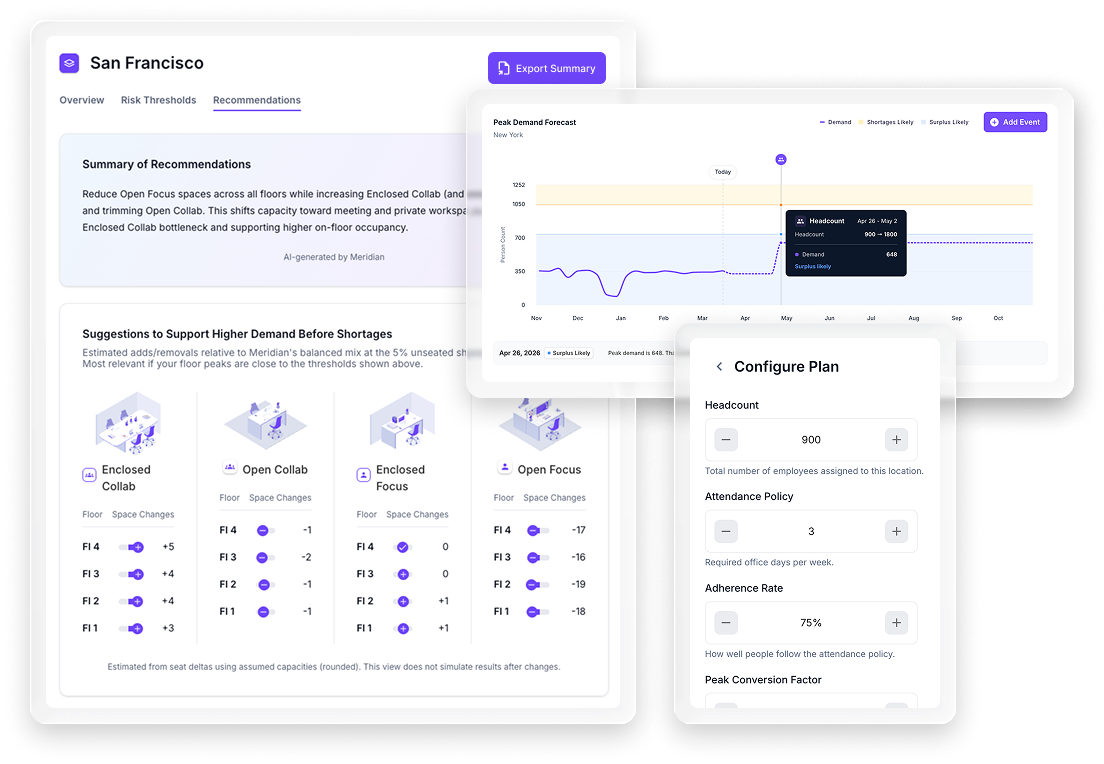
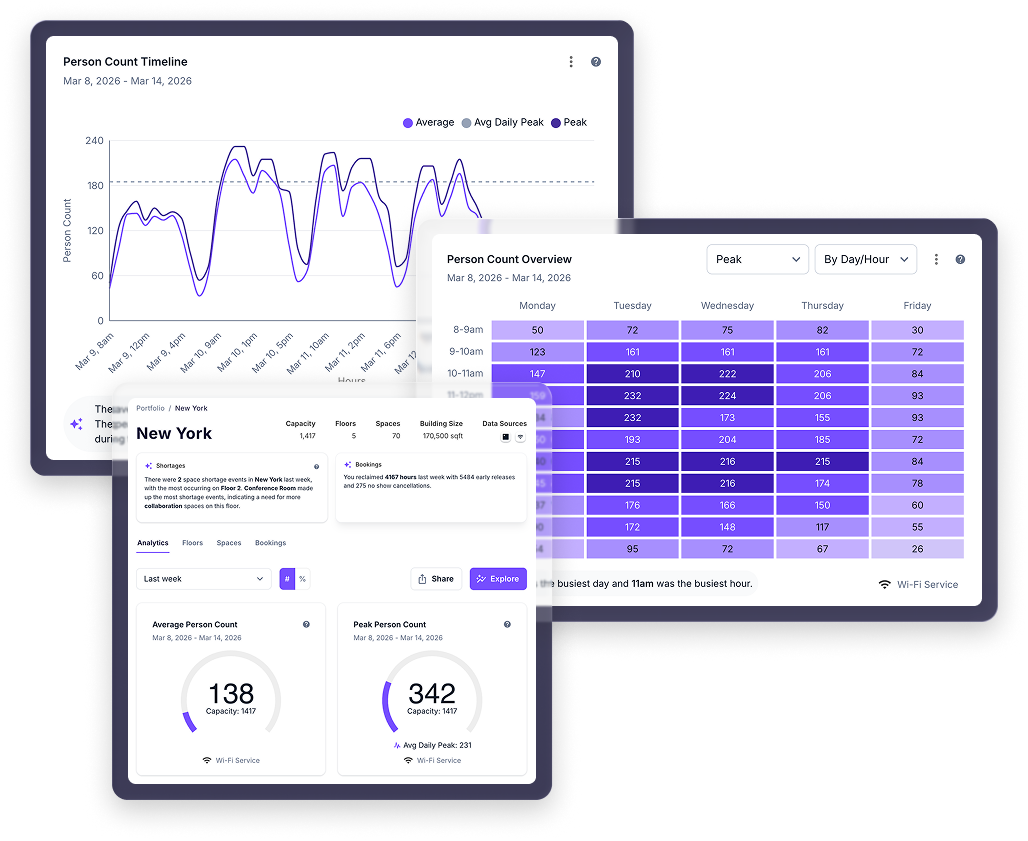
San Francisco office dashboard displaying demand forecasting metrics, scenario recommendations, and utilization trend graph
ONe platform, four outcomes

Connect the Occupancy Data You're Already Collecting to the

Decisions You Have to Make.

Powered by the VergeSense Large Spatial Model (LSM)

Know how a space will be used before you build it, before you lease it, or before you make a design or stack change. Every forecast draws on 250M+ square feet of real workplace data from portfolios in 50+ countries, calibrated to your industry and building type.


  • Icon representing social gathering and collaboration hotspots
    Where people choose to gather

    Predicting collaboration hotspots and social clustering patterns.

  • Icon showing movement pathways and foot traffic flow
    How they move through layouts

    Understanding circulation patterns and wayfinding behavior.

  • Exclamation point inside location pin icon representing capacity mismatches and underused or overloaded spaces
    Which spaces are underused or overloaded

    Identifying utilization patterns and capacity mismatches.

  • Connected node diagram icon illustrating hybrid work schedules and changing behavioral patterns
    How new work patterns change behavior

    Modeling impact of hybrid schedules and policy changes.

Data visualization graphic illustrating Large Spatial Model predictive training inputs

Whatever Decision You Own, Meridian Gets You There Faster

Meridian turns the data you already have into the answer your role is accountable for.


Start with the Data You Already Have

Meridian works across badge, WiFi, video conferencing, and booking data through 50+ native
integrations. Sensors are an optional add-on for the spaces your existing data cannot answer.

Sensors & Hardware Occupancy Integrations
Infinity Area Sensor Badge Data
Entryway Sensor Video Conferencing (Logitech Rally Bar, Rally Bar Mini)
Other Sensor Data WiFi Data
Integrations (optional add-on) Booking Data
APIs

Decisions that Paid for Themselves.

Global grocery retailer

$1.5M / Floor

Avoided in expansion costs per floor after finding a 178-desk surplus and the wrong room mix in two hours, without signing a new lease.

Fresenius
Medical Care

$6M / Year

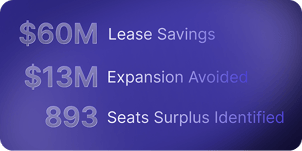
Avoided in lease costs through HQ consolidation, or $60M over ten years, with no impact to employee experience.

Global biotech company

$13M

Avoided $13M in expansion costs by identifying passive occupancy and making targeted design decisions.

Global management consultancy

$600K / Year

Avoided in expansion costs by automating room release, plus 4,100 hours of ghosted meetings recovered.

Real Expertise, Not Just a Platform

Consult with our Workplace Insights & Advisory Team to solve your
toughest problems.


Frequently Asked Questions

What is Meridian?

Meridian is the VergeSense Workplace AI platform. It turns the workplace data you already have into four outcomes: portfolio right-sizing, occupancy planning, data-driven design, and workplace automation, so real estate and workplace teams make space decisions with evidence instead of guesswork. Meridian is powered by the Large Spatial Model, trained on 250M+ sq ft of real workplace data, and is used by 200+ enterprise customers across 50+ countries to plan leases, redesigns, and headcount moves with confidence.

How is Meridian different from a consulting engagement or occupancy study?

A consultant study takes three to six months, costs $250K to $1.5M or more, and is often outdated by the time it lands. Meridian runs continuously and recalculates when headcount, policy, or attendance changes, so the guidance stays current and you never start from zero. One global grocery retailer found a 178-desk surplus in two hours and avoided $1.5M in expansion costs per floor, work a weeks-long study had missed. Consultants also often profit from the space they recommend, while Meridian gives an independent read.

Do I need to install sensors to use Meridian?

No. You can start with just a floor plan. Meridian works with data you already have, including badge, WiFi, video conferencing, and room booking systems, and the Large Spatial Model forecasts how a space will be used before anything is installed. Sensors are an optional add-on for the specific spaces your existing data cannot answer, so you add them only where they earn their place, not across the whole portfolio.

What data sources does Meridian work with?

Meridian brings badge, WiFi, video conferencing, room booking, and sensor data into one platform through 50+ native integrations, including ServiceNow, Planon, Robin, Envoy, and Microsoft Places. Everything feeds a single, trusted picture of how space is used, from portfolio down to the individual desk. Rather than replacing your systems, Meridian unifies the signals you already collect, then layers in sensor measurement only where you need a more precise read.

What is the difference between Occupancy Intelligence and Predictive Planning?

Occupancy Intelligence is the measurement layer: a trusted picture of how every space is used today, from portfolio down to the desk, with occupancy measurement, portfolio reporting, a plain-language workplace assistant, and unified data sources. Predictive Planning is the forecasting layer: test lease, design, headcount, and policy changes before you commit, with demand forecasting, scenario modeling, and space supply analysis that finds the point where experience degrades. Together they form the Meridian platform, one layer to measure what is happening and one to forecast what happens next.

What is the VergeSense Large Spatial Model (LSM)?

The Large Spatial Model is the AI model VergeSense built to predict how people use physical space. Trained on 250M+ sq ft of real workplace behavior, it forecasts where people gather, how they move through layouts, which spaces are underused or overloaded, and how new work patterns change behavior. It can predict how a space will perform from a floor plan alone, before any sensors are installed, and it gets more accurate over time as your own occupancy data feeds in.

What is the difference between active and passive occupancy?

Active occupancy is a person present and using a space. Passive occupancy is the belongings that claim a space when no one is there, like a laptop or jacket left on a desk. Measuring both gives a true read on how space is actually used, which is how one global biotechnology company identified overlooked demand and avoided $13M in expansion costs through targeted design decisions.

Who is Meridian for?

Meridian is built for enterprise real estate leaders, workplace leaders, occupancy planners, and facilities leaders. Real estate leaders right-size the portfolio without a consultant's PDF. Workplace leaders design spaces for how people actually behave. Occupancy planners get an independent read on space decisions before budget is committed. Facilities leaders automate cleaning, energy, and staffing based on real occupancy. It fits enterprise teams making high-stakes calls on leases, redesigns, headcount moves, and building operations who want data behind them.

How quickly can Meridian deliver results?

In minutes, not months. Teams have modeled impacts of proposed changes in minutes and hours, walking into leadership conversations with quantified trade-offs the same week rather than waiting weeks for a report back. Because Meridian runs continuously, the numbers stay current as headcount, attendance, and policy change, so you are never acting on a snapshot that has already gone stale.

What is included with a Meridian subscription?

Every subscription includes platform access and a VergeSense Strategist. They know your portfolio, work in your data, and bring you recommendations on a recurring cadence. Meridian includes right-sizing, demand forecasting, scenario modeling, analytics dashboards, and API access. Meridian Plus adds third-party occupancy data integrations for teams that want to start from data they already have. Sensors are available as an optional add-on, as is Strategic Advisory Services, dedicated consulting hours with our industry experts for portfolio strategy, workplace research, occupancy planning, and change management.