

<img height="1" width="1" style="display:none;" alt="" src="https://px.ads.linkedin.com/collect/?pid=2274356&amp;fmt=gif">
Skip to content

NEW REPORT: The Self-Adapting Workplace, from VergeSense & WORKTECH Academy Download Now

Modern high-rise corporate office skyscrapers viewed from a low angle against a clear blue sky

CUSTOMER STORIES

Fresenius logo

How Fresenius Saved $60M Over 10 Years with Occupancy Intelligence

  • IndustryIcon of an office building representing healthcare and life sciences industry
    INDUSTRY:

    Healthcare / Life Sciences

  • Process diagram icon representing portfolio right-sizing
    USE CASE:

    Portfolio Right-Sizing

  • Icon showing multiple people representing a large team
    COMPANY SIZE:

    10,000+ Employees

  • Upward trending bar chart icon representing $60M financial savings
    KEY RESULT:

    $60M Saved Over 10 Years


The Challenge

Fresenius Medical Care operated two North American
headquarters buildings, and leadership suspected one might be
significantly underutilized. However, they had no reliable data to
support a consolidation decision worth tens of millions of dollars.

Manual observation studies and anecdotal feedback from
department leaders produced conflicting results. Some teams
insisted they needed the space; others admitted they rarely used
it. Without occupancy data they could trust, leadership could not
confidently commit to letting go of a major lease.

The stakes were high: consolidate too aggressively and
employees feel cramped. Fail to act and the company continues
paying for space no one uses. Fresenius needed a data-backed
answer, not a guess.

Stagger-image-medical

Stager-image-v2

The Solution

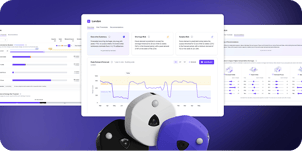
Fresenius deployed VergeSense sensors across both headquarters buildings to measure actual occupancy at the space level  - desks, conference rooms, and collaboration areas. Within four months, the platform revealed that average utilization in one of the two buildings was just 20%.

This wasn’t a single-day snapshot. VergeSense showed the pattern was consistent across weeks, months, and seasons. Even on peak days, the building never approached capacity. The data gave leadership the confidence to make the call.

Armed with this evidence, Fresenius chose not to renew the lease on the underutilized building and consolidated all employees into the remaining headquarters. Post-consolidation surveys confirmed that teams had sufficient space and employee experience was unaffected.

The Results

Purple icon highlighting ten-year financial savings
$60M

Saved Over 10 Years

Purple icon highlighting annual lease cost avoidance
$6M

Annual Lease Avoidance

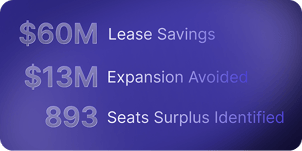
The consolidation delivered $6M in annual lease avoidance,
totaling $60M over the 10-year lease term. Beyond the direct
savings, Fresenius avoided costly redesigns by validating space
needs with real utilization data before making any physical
changes.

Employee feedback post-consolidation confirmed that the
remaining building was sized correctly, with no meaningful impact
to satisfaction or productivity. Fresenius transformed a gut-feel
debate into a data-backed decision that became a model for how
the company approaches real estate planning.

Modern collaborative office workspace with professionals sitting around a wooden table in a meeting

What’s Next?

Fresenius continues to use VergeSense to monitor utilization across its consolidated headquarters,
ensuring space allocations remain optimized as teams evolve. The success of this project has
established occupancy intelligence as a standard input for all future real estate decisions.

Explore Other Resources