



Test the Decision Before You Commit
Model lease, design, headcount, and policy changes in minutes, then walk into the room with quantified trade-offs leadership will trust.
Trusted by 200+ enterprises in 50+ countries. Powered by 250M+ sq ft of real occupancy data.
Three Decisions, One Tool.
Every planning decision, from headcount shifts to lease commitments, backed by AI forecasts and real occupancy data.
Model Portfolio Scenarios Before the Next Lease Cycle
Forecast space needs by location, department, and work mode. Model consolidation savings or expansion costs before committing.
Explore Portfolio Right-Sizing →Test Design Scenarios Before Construction Begins
Predict which space types you'll need based on headcount and hybrid trends. Test floorplan scenarios against forecasted demand.
Explore Data-Driven Design →Plan Where Every Team Sits, Before Headcount Shifts
Know where teams will sit as you hire. Model stacking options to optimize for collaboration, space constraints, and costs.
Explore Occupancy Planning →How a Plan Comes Together
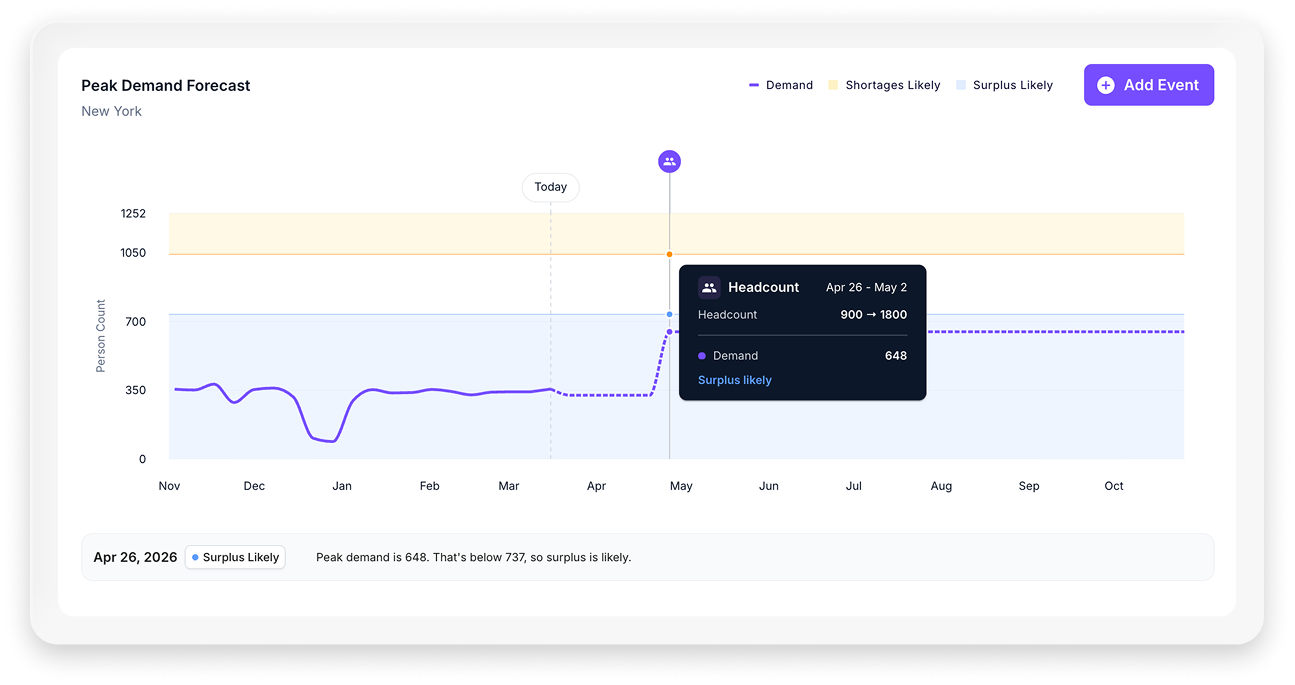
Connect your occupancy data or start with benchmark inputs. Upload a floor plan and Meridian maps your current supply, like seats, spaces, floors, against the peak demand it expects so you can see exactly where you stand today.
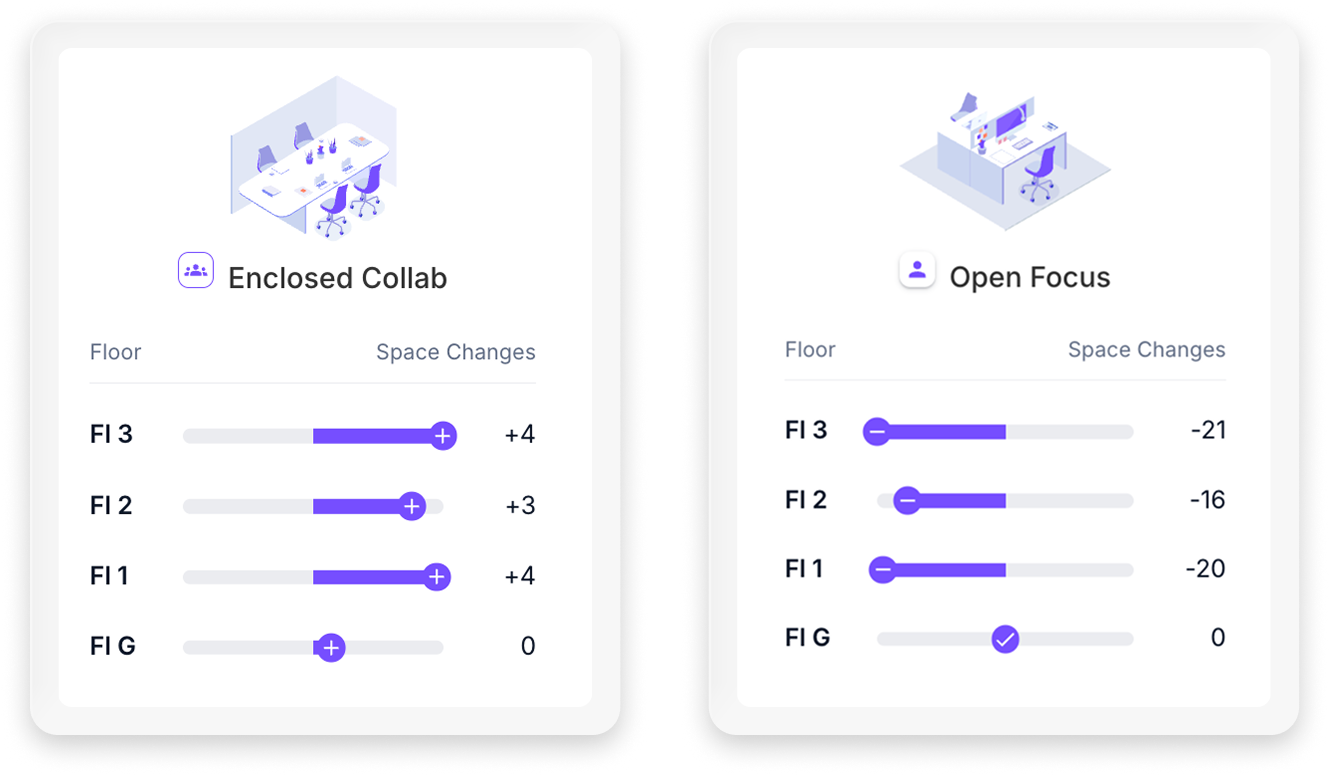
Meridian automatically flags where you're carrying excess space and where you're approaching bottlenecks, by location, floor, neighborhood, and team. See your risk threshold before it becomes a real estate problem.
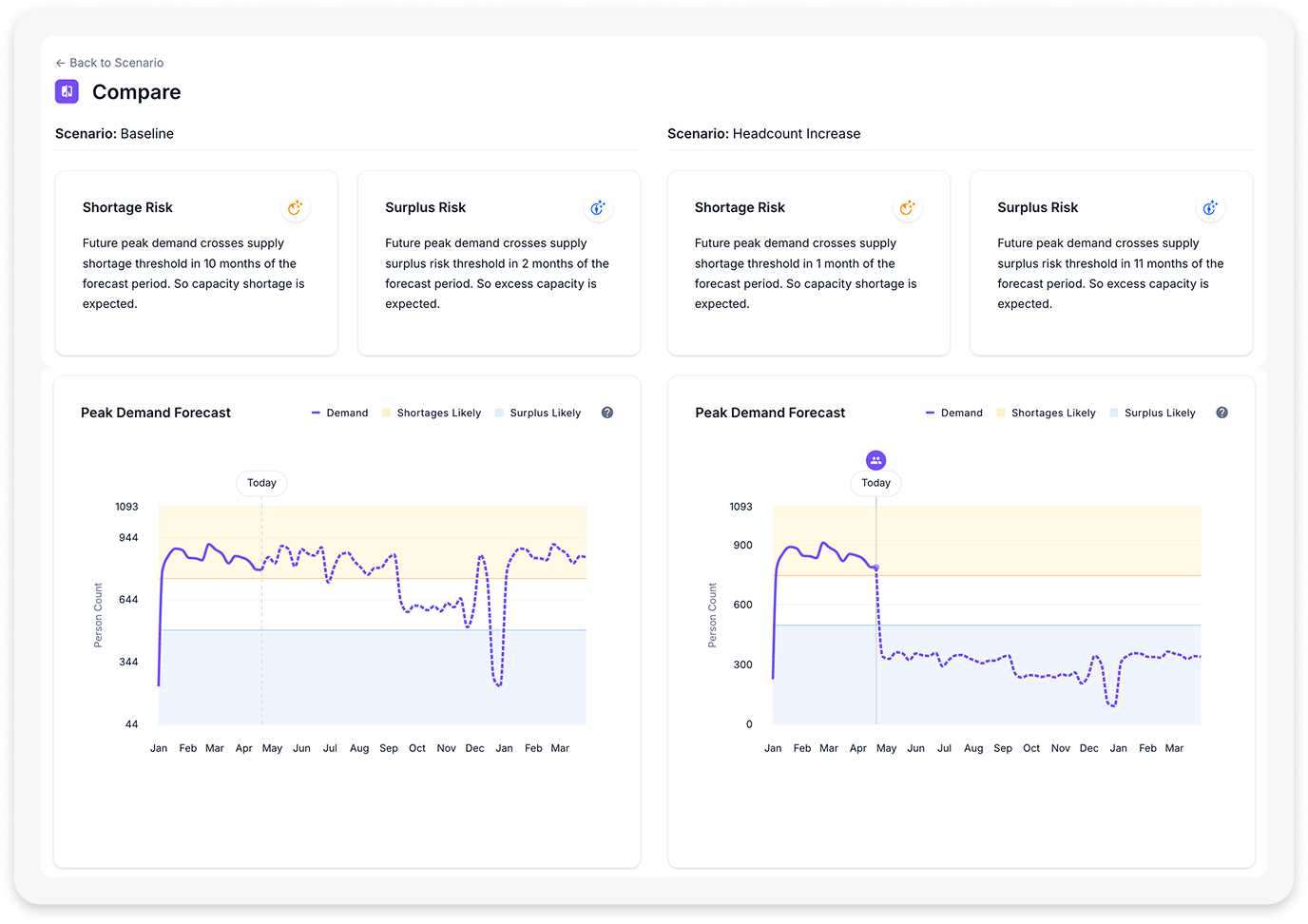
Compare scenarios side by side. Model a lease exit against headcount growth or a redesign, and see when each one crosses into shortage or surplus, down to the month.
The AI Behind the Forecast: The VergeSense Large Spatial Model
What it is
Most AI models don't know what a conference room looks like on a Thursday in Q4. The Large Spatial Model does, because it's been trained on 8 years of real occupancy behavior across 250M+ square feet of workplaces, across industries, geographies, and space types.
Why it Matters
That depth of training means Meridian can forecast space demand even before sensors are installed, using behavioral benchmarks calibrated to your industry and work patterns. No other planning tool can do that.
-
Trained on 250M+ sq ft of
real workplace behavior -
8 years of occupancy patterns across industries,
geographies, and space types -
Millions of scenario simulations run, so your
recommendation isn't a guess, it's a probability
The Large Spatial Model is available to technology partners via API, bringing spatial intelligence directly into
IWMS platforms, experience apps, BMS tools, and design software.
What Predictive Planning Can Tell You
Know How Many Employees Won't Find Space, Before It Happens
See where your space actually breaks, not design capacity, but the real attendance level where specific space types run out and employee experience degrades. A floor with 252 'seats' may functionally break at 128 when conference rooms fill up.
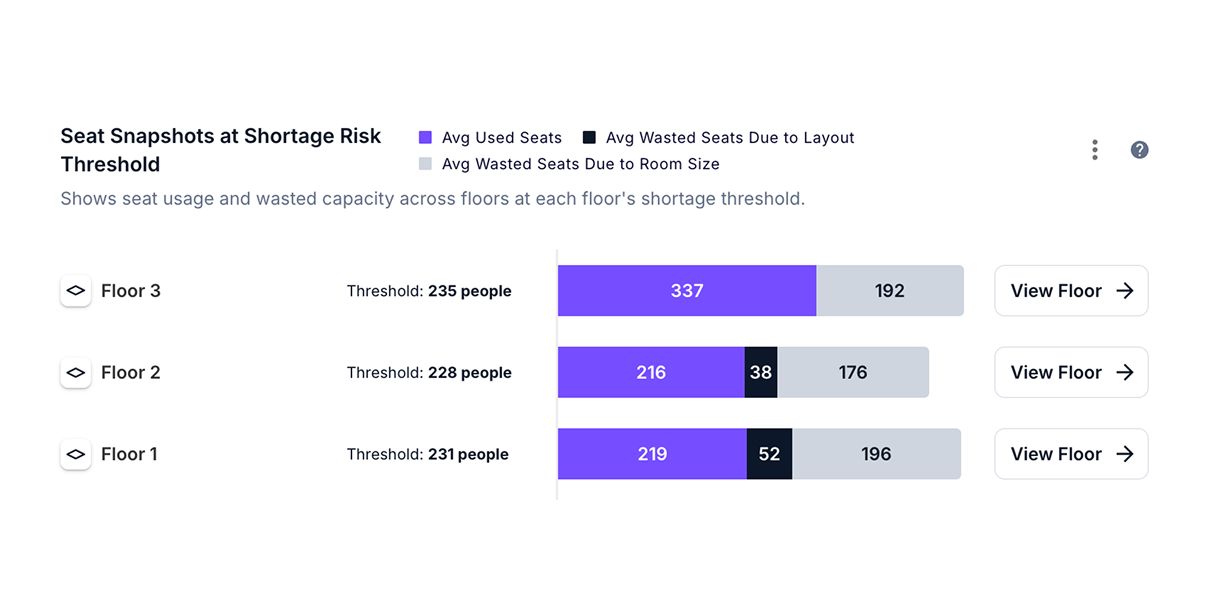
Find the Sweet Spot Between Surplus and Breakpoint
Every floor has a capacity range where it works well, not so empty it feels abandoned, not so full employees can't find space. Meridian defines that window for each floor based on how people actually show up, then flags when you're drifting outside it.
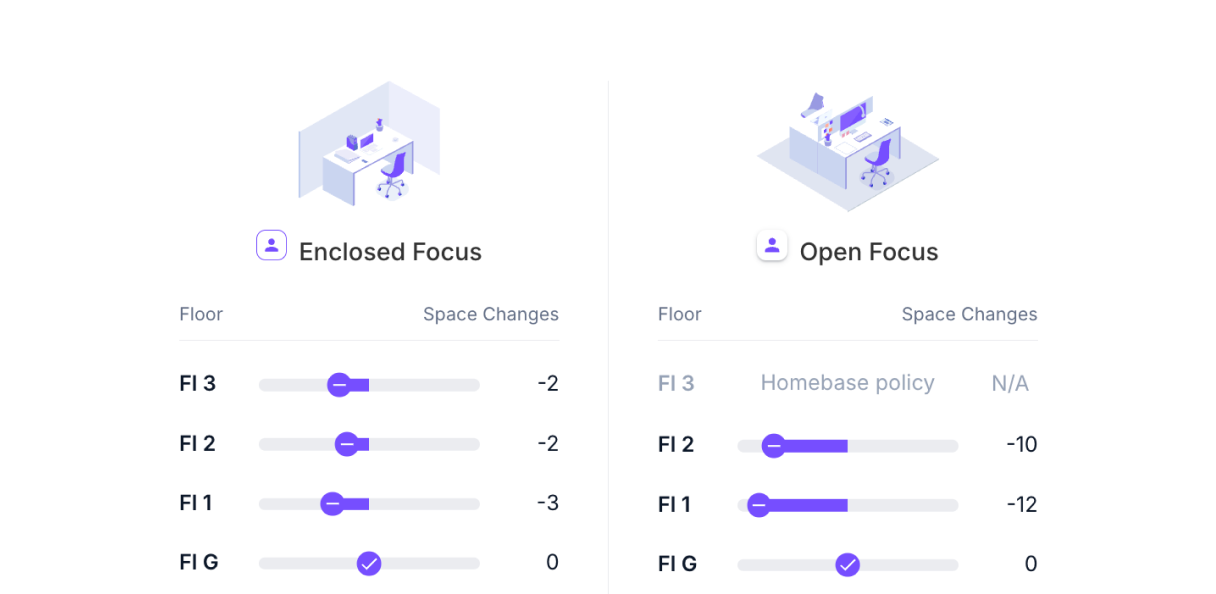
Plan Spaces You Haven't Measured Yet
No sensors in a new location? No problem. The Large Spatial Model forecasts occupancy patterns for any space using behavioral benchmarks calibrated to your industry, building type, and work patterns, so you can plan before you measure.
Turn Risk Flags into Recommendations
When Meridian identifies a surplus floor or an experience breakpoint, it doesn't just show you the problem, it surfaces the scenario that resolves it, with the ROI quantified.
The Floors They Didn't Need to Expand Into
A consultant told their real estate team they needed to expand because they were 900 desks short. Meridian found a 178-desk surplus and the wrong mix of rooms in two hours. The result was $1.5M avoided per floor, with no new lease signed.
Global Retailer's
CRE Team
$1.5M avoided per floor.
178-desk surplus found in 2 hours.
No new lease signed.
Speed to insight in minutes, not months to model any proposed change.
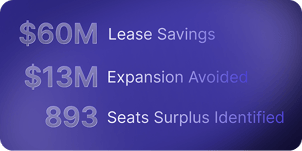
in lease savings for a
single customer
sqft of real-world data behind recommendations
countries
The Legacy Approach to Space Planning is Dead.
Here's What Replaces It.
Consultants give you a plan. Meridian gives you a planning engine.
|
Dimension
|
Traditional Consulting
|
With Meridian
|
|---|---|---|
| How fast you get an answer | 8-12 weeks | Minutes |
| What it costs | $50K–$200K+ per engagement | Platform subscription |
| Update frequency | Point-in-time snapshot | Continuously updated |
| Scenarios you can test | 1–2 options, scoped per project | Unlimited |
| Ready to present to finance | Manual assembly required | Built-in, CFO-ready outputs |
| When the world changes | Re-engage at additional cost | Automatically recalculates |
| Who owns the insight | The consultant | Your team |
Frequently Asked Questions
What is Predictive Planning?
Predictive Planning is the Meridian Platform’s AI-powered planning capability that helps enterprise real estate and workplace teams forecast space demand, model scenarios, and make portfolio decisions before committing capital. Unlike traditional planning studies, spreadsheets, or static space ratios, Predictive Planning runs continuously, updating automatically as attendance patterns shift, headcount changes, or lease events approach. It replaces the consultant engagement model with a planning engine your team owns and operates.
What is the Large Spatial Model?
The Large Spatial Model (LSM) is VergeSense's proprietary foundational AI model, purpose-built to understand how humans use physical space. Trained on 8 years of real-world occupancy behavior across 250M+ square feet of workplaces, across industries, geographies, and space types, it's the only spatial AI model of its kind. The LSM is what enables the Meridian Platform to forecast occupancy for unmeasured spaces, identify risk thresholds, and run scenarios grounded in real behavioral patterns, not theoretical assumptions.
Does Predictive Planning require a full sensor deployment?
No. Predictive Planning is designed to deliver value from day one with data you already have. Booking systems, badge access, videoconferencing data, and WiFi analytics are all sufficient to begin generating forecasts and running scenarios. For spaces without any measurement infrastructure, the Large Spatial Model can forecast occupancy patterns using behavioral benchmarks calibrated to your industry and building type, or even based on buildings in your portfolio. Sensors can be added over time to increase precision at the space level, but they're never a prerequisite.
Does Predictive Planning work with my existing booking system?
Yes. The Meridian Platform integrates natively with major space booking platforms, so your reservation and utilization data flows directly into the planning tool. Booking data is particularly valuable for understanding ghost meeting patterns, policy compliance, and the gap between reserved and actually used space, all of which sharpen your demand forecasts.
Can I use WiFi or badge data with Predictive Planning?
Yes. WiFi analytics and badge access data are both supported as occupancy inputs in Meridian. WiFi provides building and floor-level people count at up to 85% accuracy, while badge data gives you entry and exit patterns by location. Either source, or both combined, gives the Large Spatial Model enough signal to begin generating meaningful demand forecasts and scenario outputs.
How long does Predictive Planning implementation take?
For teams starting with existing data sources like booking systems or WiFi, implementation is typically measured in days, not weeks. There's no hardware deployment required to get started. Teams with occupancy sensor data already flowing into the Meridian Platform can run their first scenario within hours of enabling Predictive Planning. Full enterprise rollouts with multiple data source integrations vary by complexity, but VergeSense's implementation team is structured to get you to first value quickly.
How is Predictive Planning packaged?
Predictive Planning is part of the VergeSense Meridian platform. It's available to customers as part of their Meridian subscription, with packaging that scales to the size and complexity of your portfolio. Contact our team for details on how Predictive Planning is structured for your specific use case.
Who is Predictive Planning designed for?
Predictive Planning is built for enterprise corporate real estate, workplace, and occupancy planning leaders who are responsible for portfolio strategy, space optimization, and capital planning decisions. It's particularly valuable for teams managing large, multi-location portfolios where the cost of a wrong lease or design decision is significant, and where the speed and frequency of planning decisions has outpaced what traditional consulting models can support.
How is VergeSense Predictive Planning different from IWMS planning tools?
Most IWMS platforms are built to manage and record what exists, like leases, assets, reservations, maintenance, not to forecast what's coming. Predictive Planning is built specifically for forward-looking decisions: demand forecasting, scenario modeling, and risk identification. The Large Spatial Model gives the Meridian Platform a level of spatial intelligence that no IWMS planning module can replicate, including the ability to simulate occupancy for unmeasured spaces and identify experience risk thresholds by team and floor.
Can Predictive Planning model space for a new office location?
Yes. Because the Large Spatial Model is trained on 250M+ square feet of real workplace behavior across industries and geographies, it can generate occupancy forecasts and scenario models for locations where you have no existing measurement data. Using behavioral benchmarks calibrated to your industry, work patterns, and team size, the Meridian Platform can help you right-size a new location before you sign, so you're not committing to square footage based on assumptions alone.
Stop Guessing. Start Planning with Data
See how Predictive Planning can help your team model scenarios, quantify ROI, and make decisions Finance will back, in minutes, not months.