
Workplace Experience Assessment
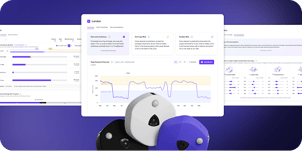
Unify your experience and occupancy data in Meridian to monitor your portfolio performance and make your next lease, redesign or team move decision with confidence.
-
OccupancyHow space is used now and in the future
-
ExperienceHow well space works for the people in it -
PerformanceHow well your workplace delivers, in one view in Meridian
A Focused, Adaptive Survey Toolkit
Workplace Assessment
OVERALL EXPERIENCE, E.G. ANNUALLY OR PRE/POST A CHANGE
Standardized survey
Core question set, consistent across every study
Dynamic questions
Tailored to your goals and context
VergeSense Moments
Frequent engagement e.g. after an event or always-on
Short pulse questions pushed in the moment or always ‘listening’
-
Your Platform or OursCollect responses through our platform or in the tool you prefer. Access insights and recommendations in Meridian.
Connect Your Occupancy and Experience Data to Better Inform
Your Decision-Making
Bring the data you already have
Analysis backed by 250M+ sq ft of real-world data
Receive clear recommendations, ready to act on
Four Questions You Can Finally Answer with Evidence
Can we give back space without hurting experience?
Occupancy: Peak and average use by space type
Experience: How people rate the spaces that would go
Explore Portfolio Right-Sizing →Did the redesign
actually work?
Occupancy: Usage before and after the change
Experience: Experience Score before and after
Explore Data-Driven Design →Where should each team sit, and
on which days?
Occupancy: Attendance by team, day and floor
Experience: How each neighborhood works for its team
Explore Occupancy Planning →Are we running the building
around real demand?
Occupancy: Real-time use by floor, room and zone
Experience: Ratings for cleaning, comfort and booking
Explore Automated Operations →Meet the Experts Behind the Assessment

Dr. Peggie Rothe
VP of Workplace Science
Peggie leads research connecting how people experience the workplace with how space is designed and used. She spent more than a decade at Leesman, most recently as Chief Insights and Research Officer. She earned her doctorate at Aalto University, researching corporate real estate and workplace management, and has published in peer-reviewed journals.

Kyle de Bruin
GM of Workplace Science
Kyle is building VergeSense's approach to measuring employee experience alongside occupancy, portfolio and cost data. He was previously Managing Director at Leesman, home of the world's largest independent workplace experience database, and is a regular industry speaker on employee experience and high-performing workplaces.
Workplace Experience Assessment FAQs
What is workplace experience measurement?
Workplace experience measurement is the practice of asking employees how well their physical workplace supports the work they do there. It covers factors like focus, collaboration, comfort, and services such as cleaning and room booking. It is different from workplace experience apps, which help people book rooms or register visitors: measurement tells you whether the workplace itself is working. Combined with occupancy data, it is one half of measuring workplace performance.
How is workplace experience measurement different from an employee engagement survey?
An employee engagement survey measures how people feel about their job, their manager and their employer. Workplace experience measurement focuses on the physical workplace: which spaces help people do their best work and which get in the way. Engagement results rarely tie back to a specific building, floor or space, so they are hard to use for workplace strategy decisions related to leases, redesigns or team moves. Workplace experience data is collected so it can be.
What is workplace performance measurement?
Workplace performance measurement tracks two things together: how space is used (occupancy data) and how well it works for the people using it (experience data). Either one alone can mislead. A floor that sits mostly empty might be oversized, or it might be a space people avoid because it doesn't support their work. Looking at both, building by building and across the whole portfolio, continuously supports your workplace strategy by telling you whether to give space back, redesign it or leave it alone, and gives every real estate and workplace decision the same evidence base.
How can a workplace strategy stay current across a real estate portfolio?
Many teams consider decisions as one-off projects. A consultant gathers badge data, survey results and floor plans for a building or headquarters, delivers recommendations months later, and the next project starts from scratch. By then, headcount, attendance and policies have often changed. Keeping your workplace strategy current means measuring workplace performance continuously and treating each lease event, redesign and team move as part of one strategy rather than a separate study. When you can access continuous occupancy and experience data, teams can revisit any site whenever a decision comes up and spot problems early instead of after the fact.
How can you tell whether a workplace change worked?
Measure before and after the change, using both occupancy data and experience data. Occupancy data shows whether people use a redesigned or consolidated space the way the plan expected. Experience data shows whether it supports their work better than before. Asking the same core questions in both studies keeps the results comparable. Without experience data, decisions like giving back a floor are usually judged on cost savings alone, because teams have no way to show the impact on employees. Feeding both results into the next plan means each decision strengthens the overall workplace strategy instead of standing alone.
Are employees too tired of surveys for workplace experience measurement to work?
Survey fatigue is real, but it usually comes from employees seeing nothing change after they give feedback, not from answering questions. Workplace experience measurement works best when results are tied to specific space decisions and employees can see what changed because of them. It also helps to match the method to the purpose. An annual or before-and-after assessment sets a consistent baseline, short pulse questions at the point of use capture feedback between studies, and open comments explain the reasons behind the scores. The right mix depends on how you’re approaching workplace strategy across your portfolio.
What is the VergeSense Workplace Experience offering?
The VergeSense Workplace Experience offering brings workplace experience data into Meridian, the Workplace AI Platform from VergeSense, alongside historical and forecasted occupancy trends. Real estate and workplace teams can measure workplace performance (how space is used and how it is experienced) across their portfolio in one place, and keep it current as conditions change. Every lease, redesign, consolidation or in-office policy decision then draws on the same up-to-date picture instead of a new study. Teams can bring in the experience surveys they already run or measure experience directly with the VergeSense Workplace Experience Assessment. The offering is available now to a select group of early-access customers.
Can we use the survey and occupancy data we already have, or do we need VergeSense sensors?
Organizations can use the data they already have, and no sensors are required to start. VergeSense can bring in results from the experience surveys an organization already runs, through an external provider or an in-house tool, and Meridian works with existing occupancy data, including badge, WiFi, video conferencing and third-party sensors. Where occupancy data has gaps, the Large Spatial Model, trained on 250M+ sq ft of real workplace data, fills them with behavioral benchmarks, and VergeSense sensors can be added later where existing data can't answer the question. The VergeSense Workplace Experience Assessment can run in Meridian or in an organization's own survey tool, and in its own tool, only anonymized, aggregated results come back to VergeSense. Past survey results can also be matched to occupancy data from the same period.
How do teams turn workplace experience results into action, and how do we get started?
Results are most useful when they start from your workplace strategy and the decisions ahead of you. VergeSense gives teams access to strategy experts who connect assessment results to an upcoming lease, redesign or team move through analyst review and workshops, and Predictive Planning lets teams test a change in Meridian before they commit. Teams can start with one site or one decision, then extend workplace performance measurement across the portfolio so the next decision doesn't start from zero. The offering is led by Dr. Peggie Rothe, VP of Workplace Science, and Kyle de Bruin, GM of Workplace Science who joined VergeSense from Leesman, the workplace experience research firm. To get started, request early access and bring one upcoming space decision to talk through with the team.
Start with One Assessment
Facing a lease, redesign or team move? Talk it through with our team and see what your space and your people are telling you.