



Renew the lease? Or give back the floor? That's just one of the multi-year, multi-million-dollar calls you're expected to make, and most teams make them the same way: badge swipes, a consultant deck from last quarter, and a gut read on how full the place look
Everything new in VergeSense this July is meant to close that gap. Faster answers, sharper data, and a case you can defend without waiting on anyone else.
See what your space costs

|
.png?width=1619&height=418&name=Screenshot%202026-07-08%20at%209.59.42%20AM%20(1).png)
If you've ever had to build a right-sizing case and put a price on it, this is for you. You know the drill: leadership asks what a move costs, you go to another team or system for the number, and by the time it comes back a parameter has changed and it's already wrong.
Now your building's real costs, annual lease cost, OPEX, and lease terms, live inside Predictive Planning. Configure them in Settings and they surface in a new Context Strip, right alongside your space and people information.
This update serves as the foundation, and in the coming weeks you'll see financial metrics built on top of it: cost per seat, per square foot, and per attended seat, with cost-aware recommendations to follow. Setting up your cost data now means you're ready the moment those land. Once they do, you'll be able to get financial context without ever having to leave your plan.
Plan for change before you commit
.png?width=730&height=754&name=Untitled%20design%20(4).png) |
.png?width=467&height=535&name=Untitled%20design%20(3).png) |
Change is constant: new teams, a policy shift, a lease decision. Each one forces the same question: do we have the space for this, and will the plan support how people like to work once the dust settles? Get it wrong and the cost is measured in millions and years of challenges. Two new event types let you put the change on the table first, so that question has an answer instead of a guess.
Space Mix Change models a redesign within your current footprint: adjust the mix and watch how it moves your peak demand forecast before you sign off on reconfiguring a floor. Temporary Demand Level handles the other side, a known, time-bound event like a two-week, 500-person offsite, dropped onto the timeline so you can see whether the building absorbs it while there's still time to act.
Predictive Planning, now inside Microsoft Places
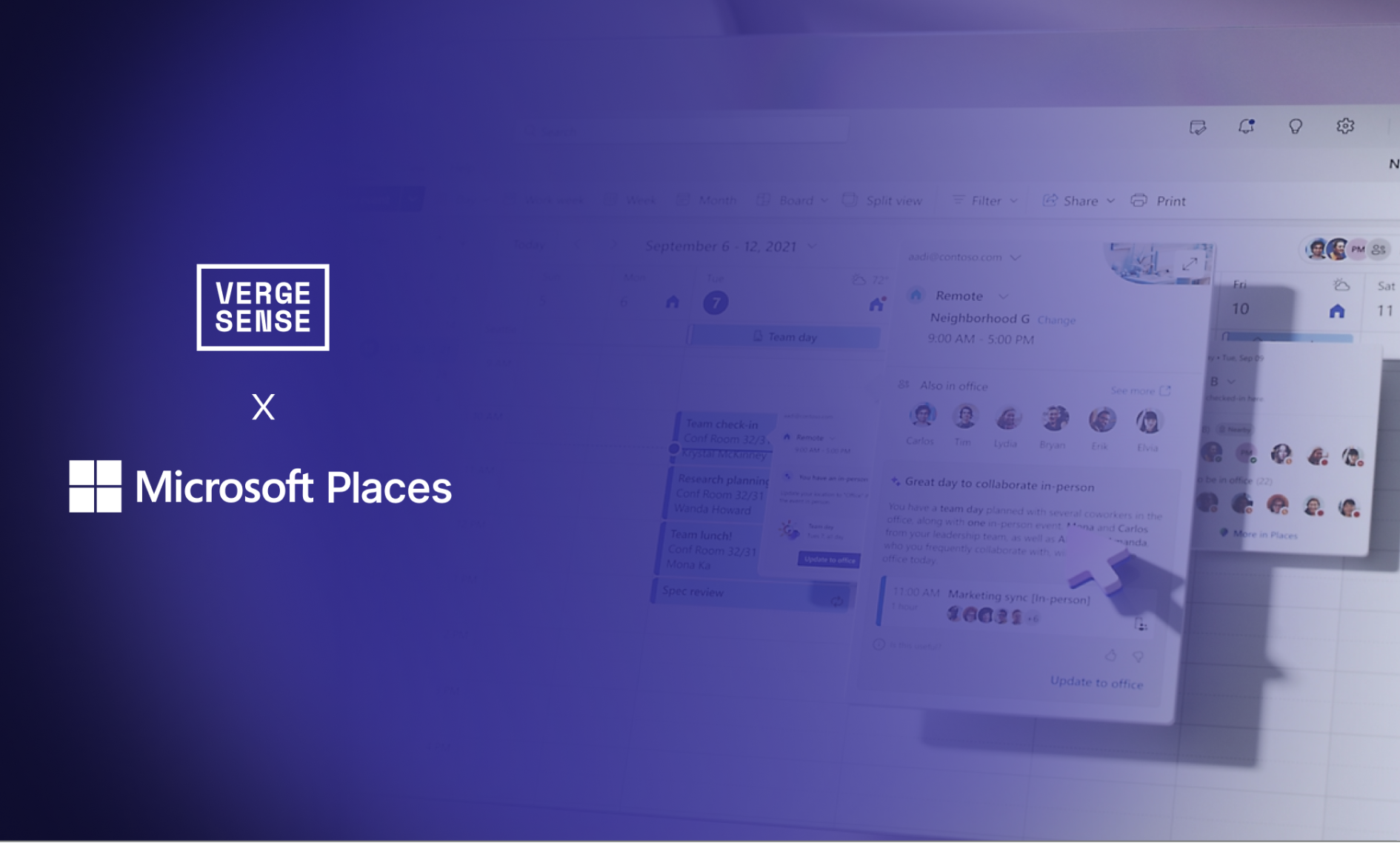
If you use Microsoft Places, you can now turn the floor plans you already manage into forward-looking plans.
Places has always given teams a strong read on how space gets used. What it couldn't do was tell you what to do next. Now it can. Places customers can activate VergeSense Predictive Planning straight from their existing floor plans and:
-
Turn those floor plans into an AI-driven demand forecast in minutes, with no manual setup or onboarding.
-
Right-size and redesign against where demand is heading, not just where it's been, so the decision holds up when someone asks you to prove it.
-
Forecast layout and headcount changes to see the downstream impact before you commit capital.
The Meridian Platform, powered by the Large Spatial Model, takes the collaboration from descriptive to predictive: the space data you already keep in Places becomes forecasts and what-if scenarios you can act on.
From plan to buildable design: VergeSense + laiout
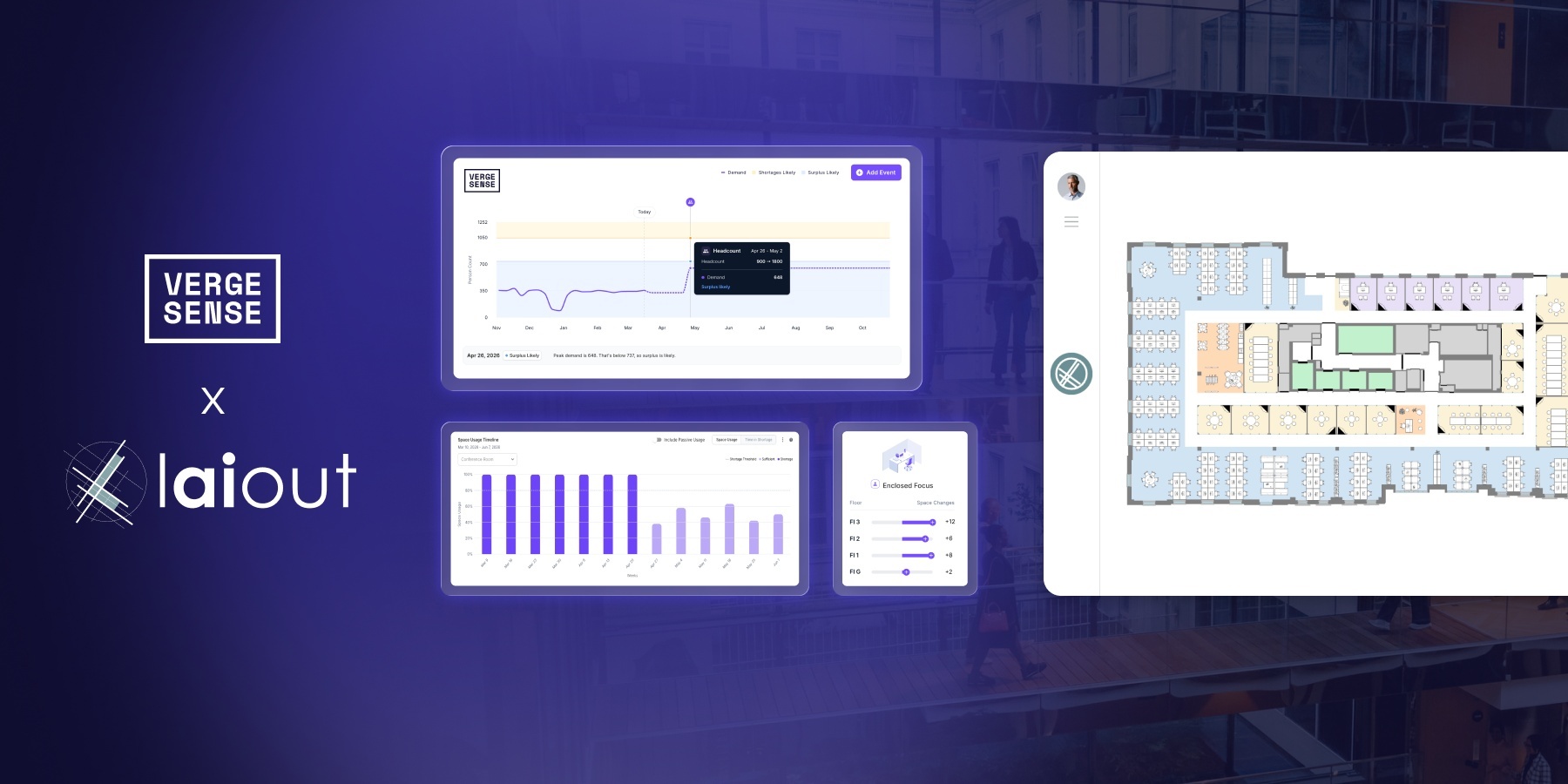
Redesign and consolidation calls now land in weeks, not quarters. But the path from occupancy data to an actual floor plan is still slow and disconnected: data in one system, planning in spreadsheets, test-fits that come back from architects weeks later, built on assumptions that don't match how people really work.
Our new partnership with laiout closes that gap. A Predictive Planning scenario from VergeSense, grounded in real behavior, flows straight into laiout, which returns fully designed, code-aware layouts with capacity, cost, and carbon updating live as you refine them.
What used to take four to twelve weeks of architectural test-fits now happens in a single working session. VergeSense answers "will this perform?"; laiout answers "can we build it?" Together we let you make the redesign call faster, and stand behind it.
The Thread
Whether you're pricing a right-sizing case, testing a redesign, planning for a spike, or turning a scenario into a buildable floor plan, every release this month does the same job: it gives the people making real estate decisions a faster, more defensible way to make them, on their own data