



A space planning decision is only as good as the data and the model underneath it. And for most real estate and workplace teams, many of those underlying pieces are still assumptions:
- A building that looks balanced on average, while one team overflows and another sits on desks it never uses.
- A daily attendance number estimated from a setup questionnaire, even in buildings where your WiFi data can give you a more accurate representation of your occupancy trends.
- A scenario that looks good on paper, with no way to check its own shortage and surplus risk before you commit to it.
Our November updates replace each of those assumptions with something you can measure, so every space planning decision rests on what's really happening in your buildings.
Plan For Every Team


A building’s average occupancy metrics can look perfectly balanced while Engineering overflows and Sales holds desks it never uses. A plan built on that average can pass every check and still leave teams without enough seats. That’s why we built team assignments into Meridian: you can place each team on its own desks, floor by floor, and see whether every team has what it needs over the next year. You'll know which teams are short on space and which have room to spare, so you can fix the plan before teams move.
What this means for you:
- Planning a restack or reorg? See how each team's new seat plans can support projected demand before the move, not after complaints start rolling in.
- Hearing that one team never has enough desks? Find out whether it's a real shortage, or a seating problem another team's surplus can solve.
- Making the case for space to leadership? Bring numbers for each team instead of a building average that hides the problem.
Measured attendance from your WiFi
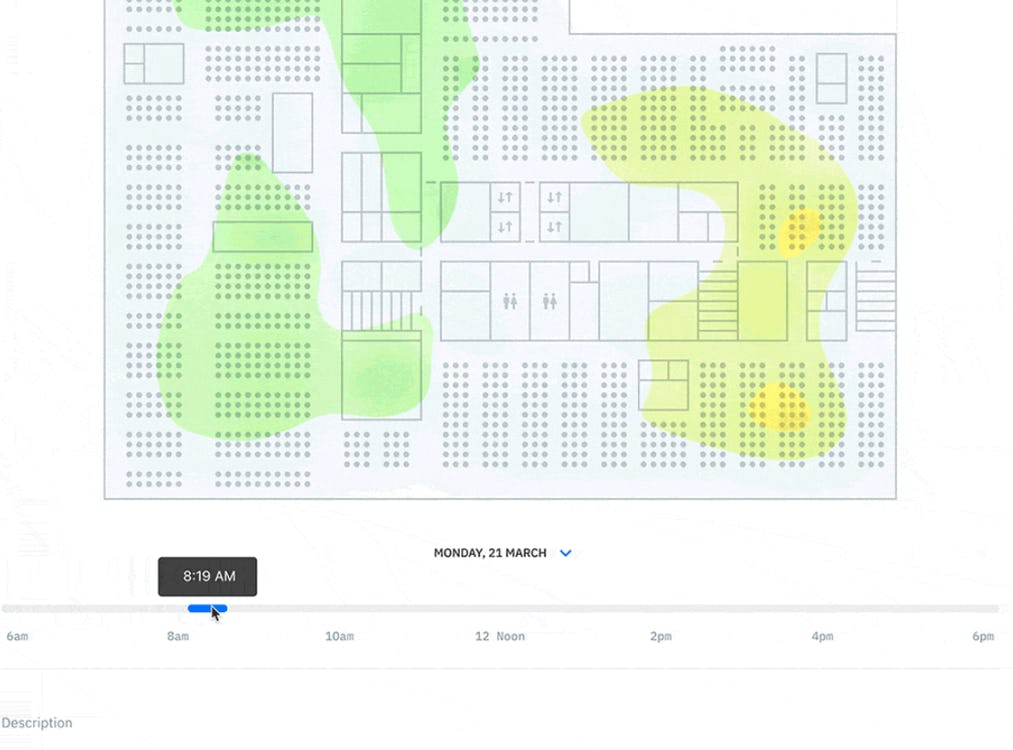
Space planning decisions begin with one question: how many people are actually coming into the office? The closer that answer is to reality, the more confidently you can size a floor, set a sharing ratio or plan a move.
If you’re integrating your WiFi data into Meridian, Predictive Planning now automatically counts unique daily attendance from the WiFi infrastructure you already have, with nothing to set up. Your attendance numbers, and every forecast built on them, reflect who actually comes in each day, so the space decisions you make from them rest on real behavior.
And where you aren’t measuring yet, you can still plan with confidence. With just a floor plan, Meridian models attendance from trends across 250M+ sq ft of real occupancy data, and the forecast sharpens as your measured data comes in.
What this means for you
- Checking whether your attendance policy is working? See real daily attendance by building.
- Forecasting next year’s space needs? Start from measured attendance, so the forecast holds up when finance asks where the number came from.
- Planning without sensors in every building? Put your existing WiFi infrastructure to work before you invest in new hardware
Stress-test a scenario before you commit to it
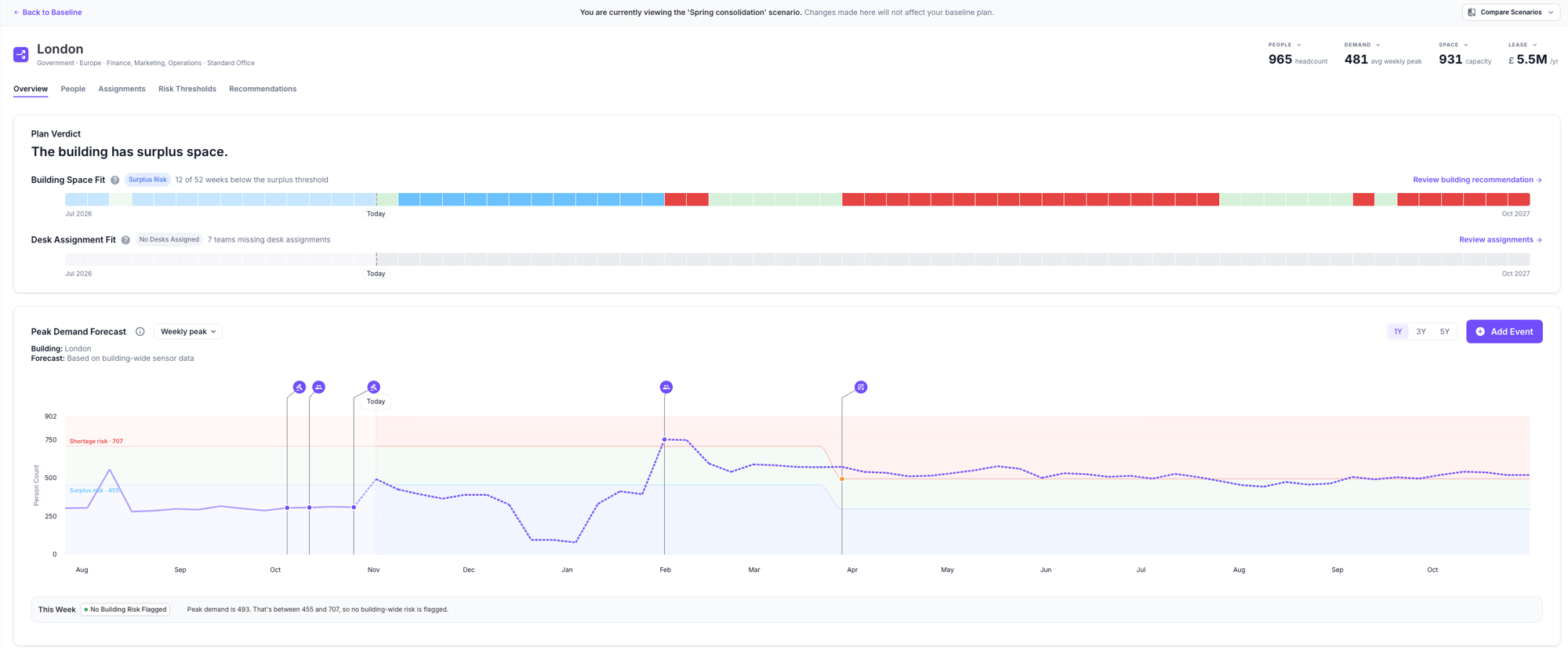
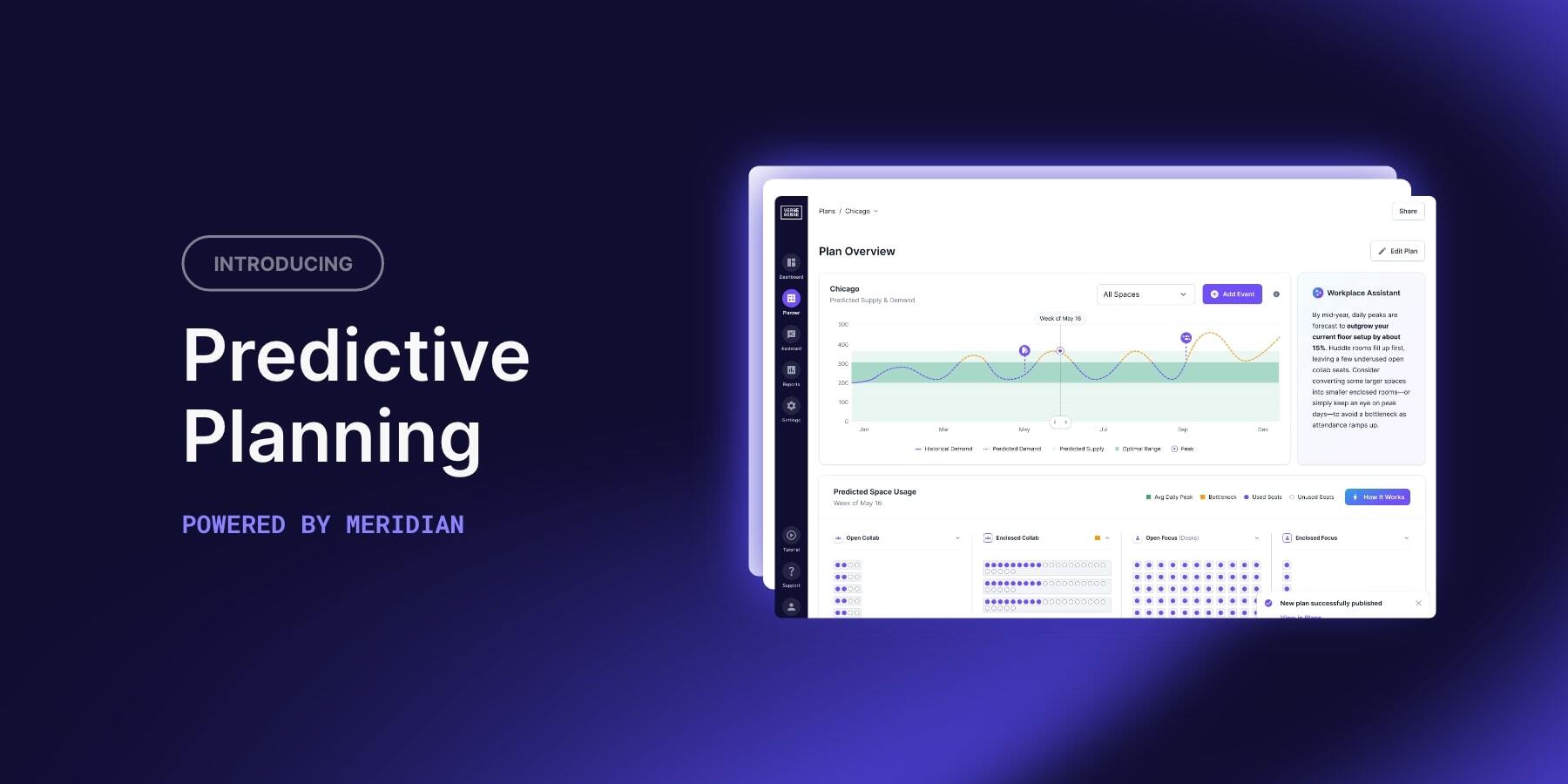
Last month, Plan Verdict and Recommendations showed you whether a building is heading for a shortage or a surplus over the next 12 months, and what to do about it. Now we’ve taken both a step further.
Risk thresholds, the attendance levels where a floor tips into shortage or surplus, now live inside every scenario, along with their recommendations. As you model a change, you can see exactly where those tipping points land, whether the move takes the building back within range, and refine it before you commit capital.
What this means for you
- Weighing a consolidation or a floor give-back? See whether the floors you keep can absorb the people moving in.
- Comparing redesign options? Each scenario now shows its own risk and its own recommended next step, so you can compare options on the same terms.
- Taking a plan to your CFO? Show the before and after for the exact change you're proposing.
Better decisions, built on what's real
Together, these updates take the guesswork out of the places it hides:
- Team assignments show whether every team has the space it needs, not just whether the building does.
- WiFi attendance grounds your forecast in who actually came in.
- Scenario risk thresholds and recommendations tell you whether a change fixes the problem before you make it.
The result is a space plan you can defend, because every number in it reflects how your buildings are really used. Log in to Meridian to try them out, or reach out to your Customer Outcomes Manager for a walkthrough.