


Change is constant - new teams, a policy change, a lease decision. And no matter what it is, it forces the same question: do we actually have the space for this and will our plan still hold once the dust settles? And these aren't inexpensive decisions. Reconfigure a floor the wrong way, over-build for demand that never shows, or under-plan for a team that's about to grow, and the cost of that mistake is measured in millions and years of lease.
But what if you could see the change before you commit to it? Fold what you know is coming directly into the plan, watch what it does, and decide with that in front of you, before the budget is spent or the walls come down. That's what two new capabilities in Predictive Planning are built to do.
.png?width=730&height=754&name=Untitled%20design%20(4).png)
Test a redesign before you build it
.png?width=642&height=735&name=Untitled%20design%20(3).png)
Sometimes the thing that's changing is the space itself. Often this is about working within the footprint you already have, so the question isn't how much space to add, it's what would change if you swapped one type of space for another inside your current footprint.
Space Mix Change lets you model exactly that: changes within your current footprint. You take the building as it is, adjust the mix, and watch how it moves your peak demand forecast. Say you're planning to reconfigure your fourth floor. Before you sign off on the design, you model the new mix and see whether it can hold the people who need to be there, or whether you're about to spend heavily on a layout that breaks under real demand.
Plan for the spike before it lands
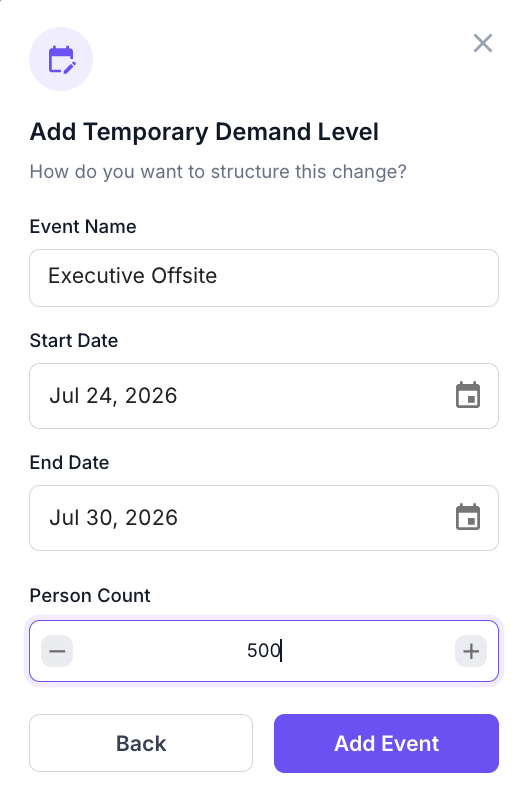
Other times the building supply remains the same, but the demand on it doesn't. A two-week executive offsite is bringing 500 extra people into the office next quarter. A hiring wave or a seasonal surge is on the way. None of that lives in a standard forecast, so the plan assumes a normal week you already know won't happen.
Temporary Demand Level lets you place that known event on the timeline, with a start and an end date, and see how the building absorbs it. So you find out whether the building can absorb it while there's still time to act, instead of the week it happens.
Decide before you spend
Whether the change is to the space or to the people in it, the principle is the same. You don't have to wait for the change to arrive to find out whether your plan holds. You can put the move on the table, see what it does, and make the call with the numbers in front of you. Change is coming either way. Now your plan can see it first.