

.png?width=840&height=420&name=6fc8ec71-4ace-4e2d-8fa0-b0174de5f067_Unassigned_Seating_2_V4%20(1).png)

Agile Seating: A Data-Driven Guide for Modern Workplaces
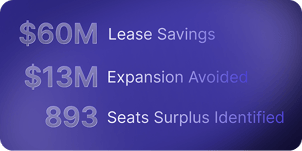
According to VergeSense's Workplace Occupancy and Utilization Index, average capacity usage across enterprise portfolios held between 9 and 11% in 2025. But real estate budgets rarely reflect that.
Real estate and workplace teams are still provisioning space based on headcount, signing leases against peak assumptions that rarely materialize, and paying full price for floors that see meaningful activity only two or three days a week.
Agile seating is one approach to space planning that decouples space allocation from headcount. Instead of provisioning desks for everyone who might show up, organizations design and plan flexible spaces around who actually does, and when.
This guide looks at:
- What agile seating means
- The business case for making the shift to flexible, unassigned workspaces
- A practical framework for implementing it using occupancy data
Most enterprise portfolios are sized for headcount, not actual attendance
See how the world's largest workplace occupancy dataset reveals what's really happening in corporate workplaces.
Download the Index
What Is Agile Seating and Why Does It Matter?
In a traditional assigned seating model, desks might sit empty whenever employees work remotely, travel, or take meetings off-site. That same pattern plays out across space types. Most organizations carry far more desk inventory than their actual attendance patterns, employee behaviors, or preferences require.
Agile seating addresses this directly. Rather than assigning one desk per employee, organizations provision space based on actual presence patterns, using hot desks, shared workstations, and reconfigurable neighborhoods that employees can use as needed.
Multiple people share the same physical workspace across different days, allowing the spaces to support real demand patterns, rather than a fixed headcount number.
But agile seating is only as effective as the data behind it. Badge swipe data tells you who entered the building, not which desks were occupied. Wi-Fi can count people across a floor or neighborhood, but can’t get down to individual space-level metrics.
Paired with occupancy intelligence, though, agile seating becomes a data-driven capacity planning discipline rather than a cost-cutting tactic.
How Hot Desks Work Within an Agile Seating Strategy
Hot desks have become a core component of agile workspace programs, and the data proves why. Organizations implementing hot-desk strategies with booking systems and occupancy sensors consistently see utilization climb well above typical baselines, with meaningful reductions in real estate costs per employee to follow.
The two most common friction points these implementations are designed to solve:
- Employees arriving to find desks already taken
- Entire floors sitting empty on low-attendance days
Booking platforms synced with live occupancy data let employees confirm availability before they commute. Operational workflows follow the same logic — one global financial services firm integrated VergeSense with their building operations platform to align cleaning frequency with actual space usage, eliminating cleaning of unused spaces entirely. The result: a 50% fee reduction and $2M in annual savings on a $4M cleaning contract.
The lesson from these implementations is consistent: hot desks work when you treat them as a dynamic system backed by real data, not a static layout with nameplates removed.
Flexibility Is the New Normal
Hybrid work has moved past the experimental phase. It's the operating model for most enterprises, and a perk of this modern way of working is that employees can choose where and how they work within the office itself. Real estate leaders are under growing pressure to prove every square foot earns its keep.
When Tuesday occupancy peaks at 65% but Fridays drop to 22%, traditional seating arrangements leave you paying for empty desks for a significant portion of the week. Fixed layouts can't adapt when your product team needs collaborative space on sprint days and focused individual work the rest of the time.
Across VergeSense's 200M+ square feet of benchmark data, enterprises are moving from rigid 1:1 desk ratios to dynamic space mixes that flex with actual demand. VergeSense's 8 Lessons from Global Leaders report documents how leading organizations are making these portfolio shifts — and what's driving the decisions behind them.
Key Benefits of Implementing Agile Seating Solutions
Traditional assigned-desk models leave cost savings and space efficiency on the table. Agile seating closes that gap — and when paired with occupancy measurement, it creates a continuous feedback loop on how space is used and where to improve.
Enhanced Space Utilization and Cost Efficiency
Most enterprise portfolios carry far more desk inventory than attendance patterns require. When Rapid7 analyzed its space utilization data, it found it could accommodate a growing workforce within its existing footprint, avoiding the cost of leasing additional floors or undertaking expensive redesigns.
The key is measuring before, during, and after implementation. Without accurate occupancy data, you're guessing at desk ratios and space mix. With it, decisions compound savings year over year.
Improved Employee Experience and Productivity
Agile seating replaces fixed assignments with genuine choice, supporting different work styles and needs across your organization. A developer who needs uninterrupted focus can claim a quiet zone.
A marketing team running brainstorming sessions can take a collaborative neighborhood with flexible furniture and whiteboards. Both get what they need without competing for the same limited spaces every morning.
Real-time occupancy data and booking systems take this further, eliminating the frustration of arriving to find your preferred area already at capacity. Employees can see live availability, plan their day, and make confident space decisions before they ever leave home.
How to Successfully Implement Agile Seating in Your Organization
Transitioning to agile seating requires more than removing nameplates and adding booking software. A structured, phased approach drives faster adoption and better outcomes.
1. Assess Current Space Usage and Employee Needs
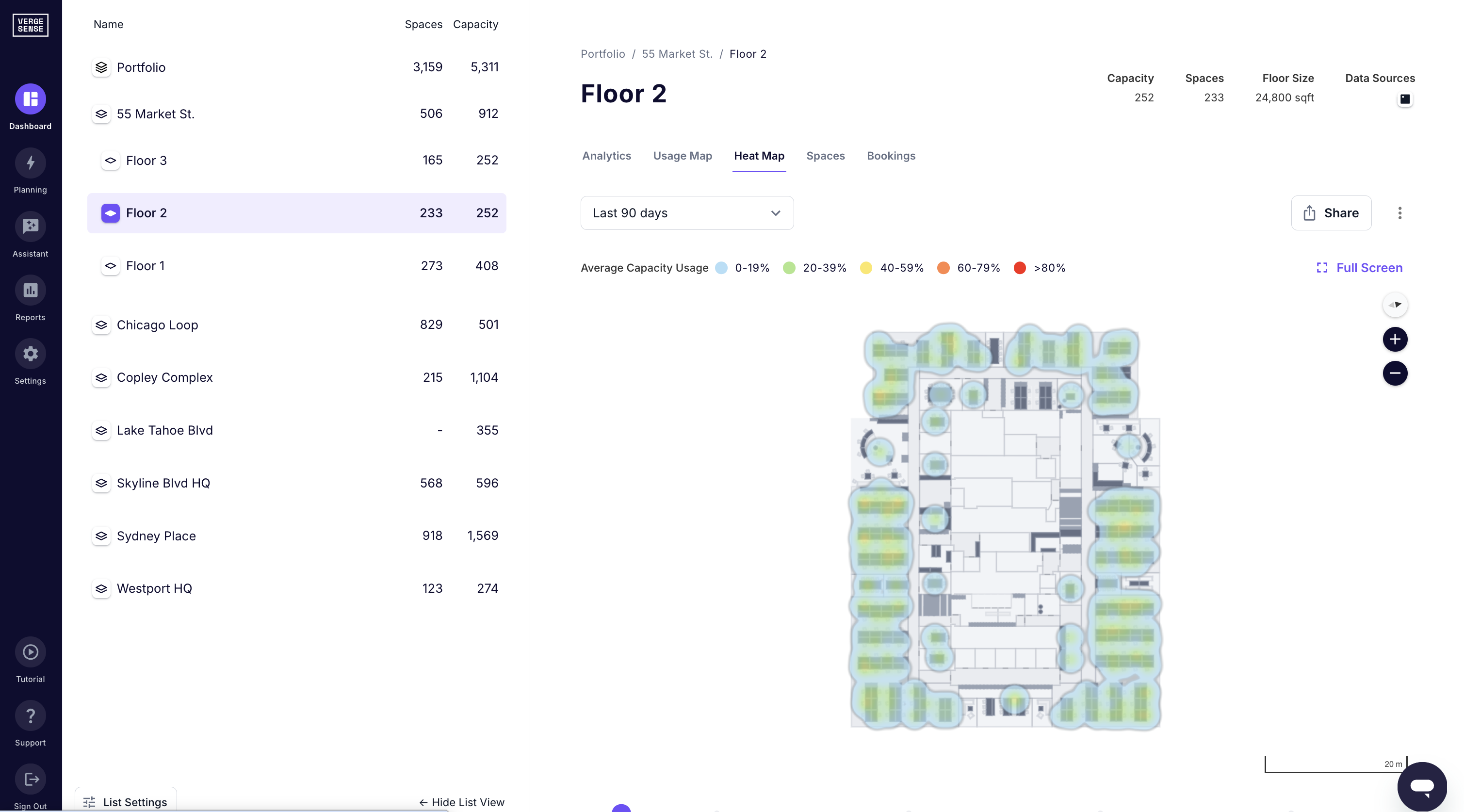
Before redesigning a single neighborhood, establish a baseline. Pull occupancy reports for the past 90 days to identify:
- Peak days and times
- Desk utilization rates by floor
- Meeting room booking versus actual usage
Most organizations find that the gap between perceived and actual utilization is larger than expected. Those gaps are where agile seating delivers the most immediate return.
Pair that data with employee surveys to capture the full picture: how often team members need focus versus collaboration space, which days they prefer to be in the office, and what friction points keep them away.
Cross-referencing survey responses with actual occupancy data often surfaces gaps between stated preferences and observed behavior. Those gaps are where your strategy should start.
2. Design Your Agile Seating Strategy
Your strategy needs three components: the right space mix, the technology to support it, and a change management plan.
Effective workspace design balances open-plan areas, quiet spaces, and enclosed collaboration zones to serve the full range of work modes. Use utilization data to set your desk-to-employee ratio.
If your data shows peak occupancy at 65% on Tuesdays and Wednesdays, you can confidently design for a 1.5:1 ratio rather than maintaining a 1:1 assigned model. Consider modular furniture systems that allow office design to evolve as occupancy patterns shift.
On the change management side, lead with data. Sharing actual utilization numbers with employees explains why the shift makes sense more convincingly than abstract efficiency arguments. Pilot with volunteer teams before rolling out portfolio-wide, and address practical concerns early:
- Storage for personal items
- Etiquette guidelines for shared spaces
- Clear desk reservation protocols
3. Measure and Optimize Performance
Implementation doesn't end at launch. Track three categories of metrics weekly for the first quarter, then shift to monthly reviews:
- Space performance: utilization by zone, peak versus average occupancy, booking-to-show ratios
- Employee experience: satisfaction scores, booking friction
- Operational efficiency: cost per occupied desk
Pay attention to the occupancy thresholds where experience degrades or underused space creates cost inefficiency. These are the signals that tell you when to add desks, convert space, or consolidate neighborhoods.
The first six months will surface patterns like which zones underperform, which days create bottlenecks, and where the desk ratio needs adjusting. Let that data drive the refinements rather than assumptions about how the space should be used.
The Future of Agile Seating in Enterprise Workplaces
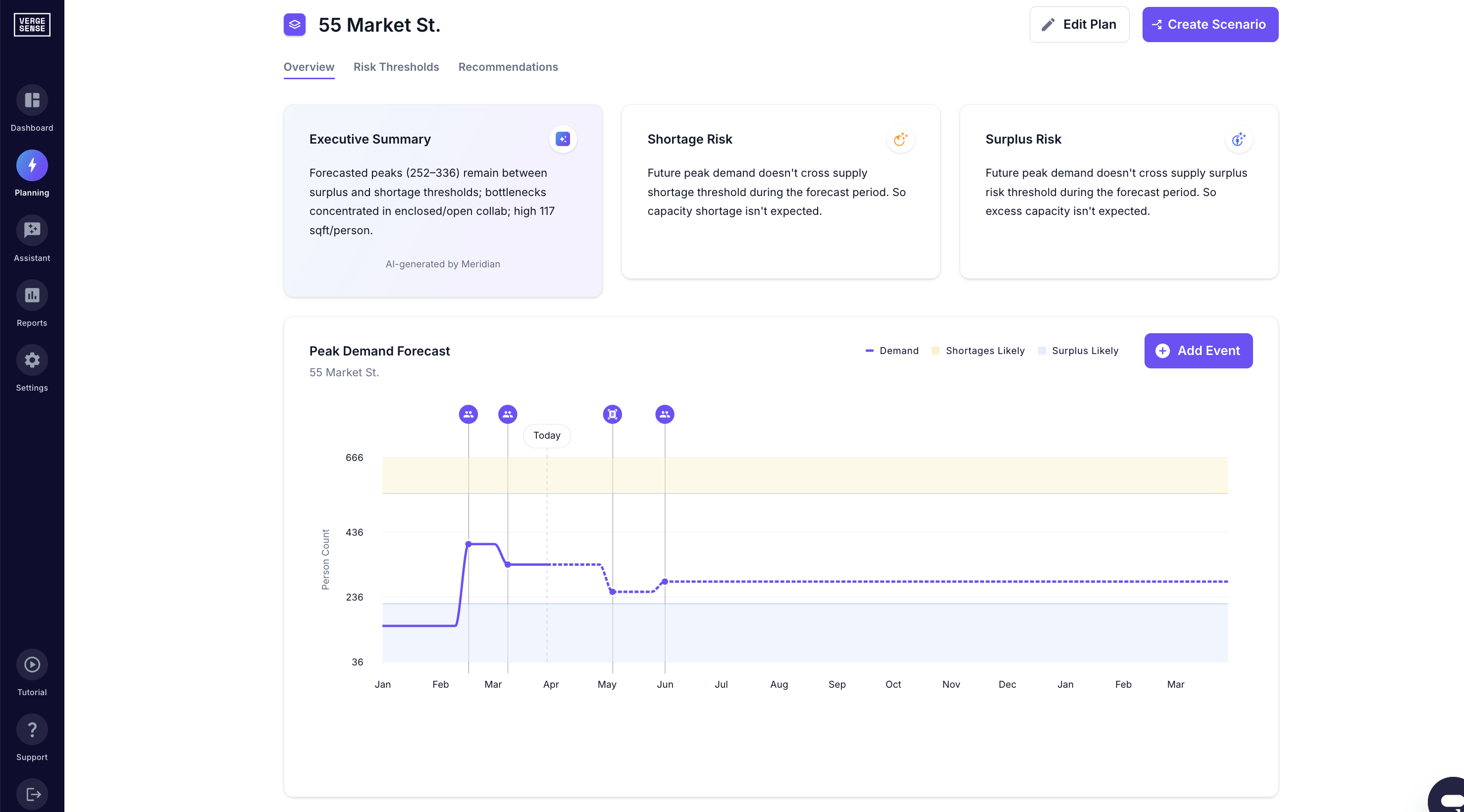
Traditional approaches to space planning rely on annual headcount projections and fixed desk ratios. Predictive Planning lets leaders forecast demand by floor and neighborhood, modeling scenarios before committing to lease renewals or reconfigurations — then continuously refine those decisions as real-world occupancy data comes in.
As agile workplace strategies mature, the priority moves from reporting what happened to anticipating what should happen next: Flagging at-risk neighborhoods before they hit breaking point, and testing your space decisions so you can act with confidence.
To get started:
- Understand your current utilization baseline
- Identify where assigned seating is creating waste
- Model the financial impact of converting those zones to flexible arrangements
- Establish the metrics you'll use to measure success
Making workplace decisions without reliable occupancy data?
See how VergeSense helps you measure how space is actually used, identify optimization opportunities, and make confident portfolio decisions.
FAQs about flexible spaces
What is agile seating, and how is it different from hot desking?
Hot desking is one tactic within agile seating: unassigned desks claimed on arrival or through a booking system. Agile seating is the broader strategy. It uses occupancy data to create a balanced space mix of focus zones, collaborative areas, and hot desks that matches how teams actually work. The goal is optimizing utilization across your entire portfolio, not just removing nameplates.
What roles and teams benefit most from agile seating?
Teams with variable in-office schedules see the greatest gains. Sales, consulting, and field-based roles that spend significant time with clients rarely need dedicated desks.
Finance, legal, and HR can adopt modified models with team-assigned neighborhoods, balancing adaptability with predictability. Hybrid teams working two to three days per week benefit from neighborhood-based agile seating that preserves team adjacency while eliminating empty assigned desks.
What metrics should you track to know if agile seating is working?
Start with the desk utilization rate during core hours. Track peak occupancy separately to catch bottlenecks before they affect experience. Monitor booking-to-show rates and average desk dwell time to spot friction.
Low show rates suggest over-booking. Short dwell times may point to missing amenities or ergonomic issues. Combine these with cost per person and square feet per employee to quantify financial impact.
How do you decide the right desk-to-employee ratio for agile seating?
Base your ratio on actual occupancy data, not headcount. If average utilization runs at 40% with 60% peaks on Tuesdays and Wednesdays, a 0.6:1 ratio provides adequate capacity while cutting waste. Build in a 10 to 15% buffer above peak occupancy. Pilot your target ratio in one neighborhood before rolling out portfolio-wide, then adjust as hybrid attendance patterns evolve.
What are the most common employee pushbacks to agile seating, and how do you address them?
The most common objection is loss of a personal home base. Address it with lockers for personal items, team-assigned neighborhoods, and comfortable seating with quality adjustable furniture. Desk availability concerns come next.
Real-time occupancy displays and booking systems address this directly. The most effective response to pushback is proof: pilot agile seating with one team, share the utilization data, and let the numbers make the case.