


Start With the Data You Already Have
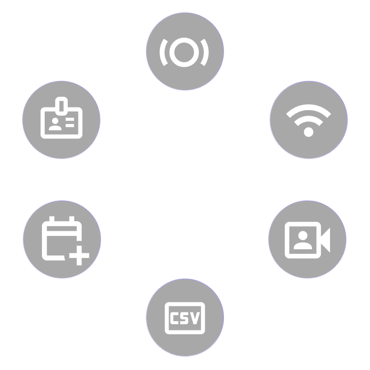
Badge data, WiFi infrastructure, videoconferencing data, third-party sensors, and space booking systems are already generating occupancy signals across your portfolio. The Meridian platform unifies them into a single planning foundation.
What Your WiFi Network Can Tell You About Your Portfolio
WiFi data is excellent for building and floor-level attendance trends, it's the fastest way to understand portfolio-wide demand without any new infrastructure.
Its limits: it can't distinguish between a person and a laptop at a desk, and it typically can't tell you how individual spaces like conference rooms or focus areas are being used. For that level of precision, adding Infinity area sensors closes the gap.
What Your Booking Data Reveals About How Space Is Really Used
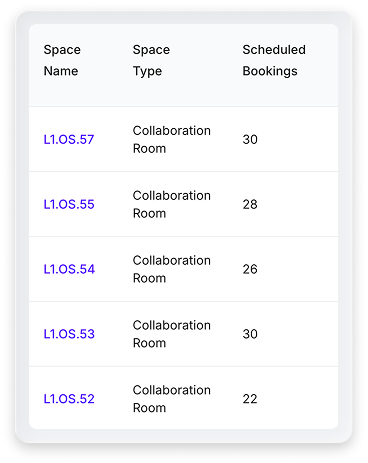
Booking data tells you a lot about intended behavior, but not actual behavior. A room can show 100% booking utilization while sitting empty for half the day. Bringing your booking data together with other occupancy data gives you the full picture: what was reserved, who showed up, and how the space was actually used.
What Entryway Sensors Tell You About Building and Floor Traffic
Entryway sensors give you reliable, accurate building and floor-level attendance data, ideal for portfolio evaluation and neighborhood planning. They can't tell you what's happening inside individual spaces once people have arrived. For conference room and desk-level intelligence, Infinity area sensors provide that next layer of precision.
What Video Conferencing Data Tells You About Meeting Room Use
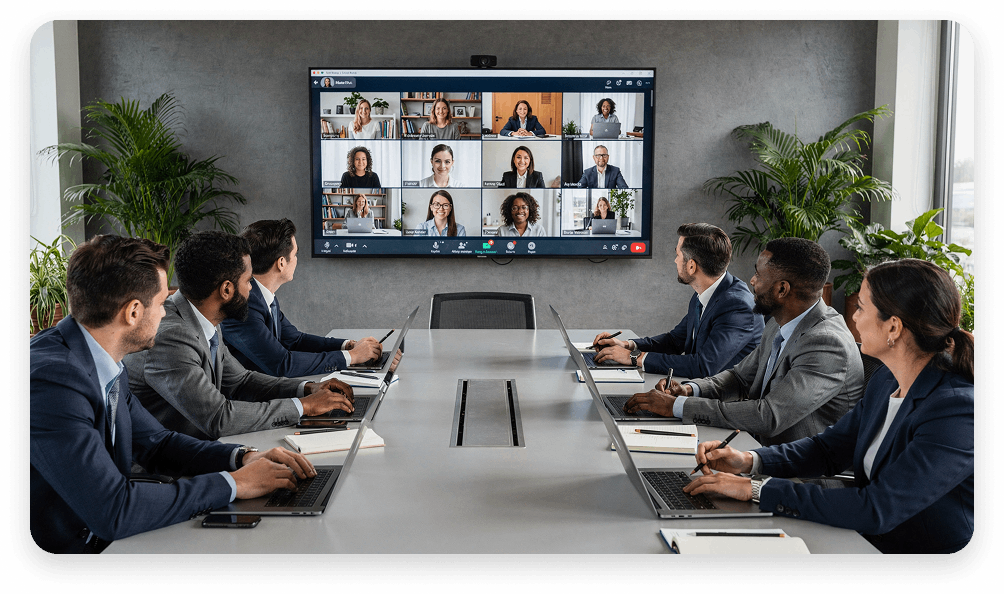
Video conferencing hardware gives you accurate person count inside conference rooms while a call is running, ideal for right-sizing meeting rooms and seeing how booked spaces actually get filled. It can't tell you what's happening when a room is used without a call, or anywhere outside the conference room itself. For open areas, focus rooms, and desks, Infinity area sensors provide that next layer of coverage.
One Platform. All Your Signals. Compounding Intelligence.
Each data source you connect adds a layer of intelligence to your occupancy baseline. WiFi tells you how many people are in a building. Booking data tells you what they intended to use. Entryway sensors tell you how traffic flows. Infinity area sensors or videoconferencing data tell you about your critical spaces. Together, they give the Meridian the richest possible foundation for demand forecasts, scenario models, and planning recommendations.
Frequently Asked Questions
What data sources does VergeSense support?
Meridian connects to WiFi analytics, videoconferencing systems, space booking systems, entryway sensors, VergeSense Infinity area sensors, or other data sources via direct integration or configurable via API. Each source adds a layer of occupancy intelligence, and you can start with whatever you already have in place. No new hardware is required to begin generating forecasts and planning insights.
Do I need to install anything to connect my existing data sources?
No new hardware is required for WiFi, booking, videoconferencing, or badge integrations. VergeSense connects to your existing infrastructure through native integrations with leading enterprise platforms, including Cisco, HPE Aruba, Juniper Mist, Logitech Rally Bars, and major space booking systems. Most integrations are live within days of configuration.
How accurate is WiFi-based occupancy data compared to sensors?
WiFi analytics deliver up to 85% accuracy for building and floor-level people count reliable enough to establish attendance baselines and feed demand forecasts. Infinity area sensors deliver 95%+ accuracy at the space level, capturing headcount, passive occupancy, and space configuration changes that WiFi can't detect. The two sources are complementary: WiFi gives you the macro picture, sensors give you the space-level detail.
Can I use existing data sources for Predictive Planning without sensors?
Yes. WiFi, booking, videoconferencing, and badge data are all supported inputs for Meridian's Predictive Planning capability. Predictive Planning can generate demand forecasts and scenario models from any combination of these sources, and for spaces with no measurement data at all, it uses behavioral benchmarks calibrated to your industry and building type. Sensors improve precision over time, but they're never a prerequisite.
What is a ghost meeting and how does VergeSense detect it?
A ghost meeting is a room reservation where no one showed up, or where attendees left without releasing the booking. Ghost meetings are one of the leading causes of perceived space scarcity. VergeSense detects them by comparing booking system data against sensor or WiFi occupancy data, then quantifies the frequency and cost by room, floor, and building so you can take targeted action.
How do multiple data sources work together in Meridian?
Each data source you connect adds a layer to your occupancy baseline. Badge data tells you who came into the building. WiFi tells you how many people are there. Booking data tells you what they intended to use. Entryway sensors tell you how traffic moves floor by floor. Infinity area sensors and videoconferencing data tell you what actually happened inside each space, including the desks and rooms people claimed without booking them. Already have sensors from another vendor? Bring that data in too, rather than replacing what you've already installed. Together, these signals give Meridian the richest possible foundation for demand forecasts, scenario models, and planning recommendations.
What's the difference between entryway sensors and area sensors?
Entryway sensors count people as they move through a threshold, they're designed for building and floor-level attendance measurement. Area sensors like Infinity monitor what's happening inside a space: headcount, passive occupancy, furniture configuration, and layout changes. Entryway sensors give you the macro picture; area sensors give you space-level precision. Used together, they provide a complete view from portfolio down to individual room.