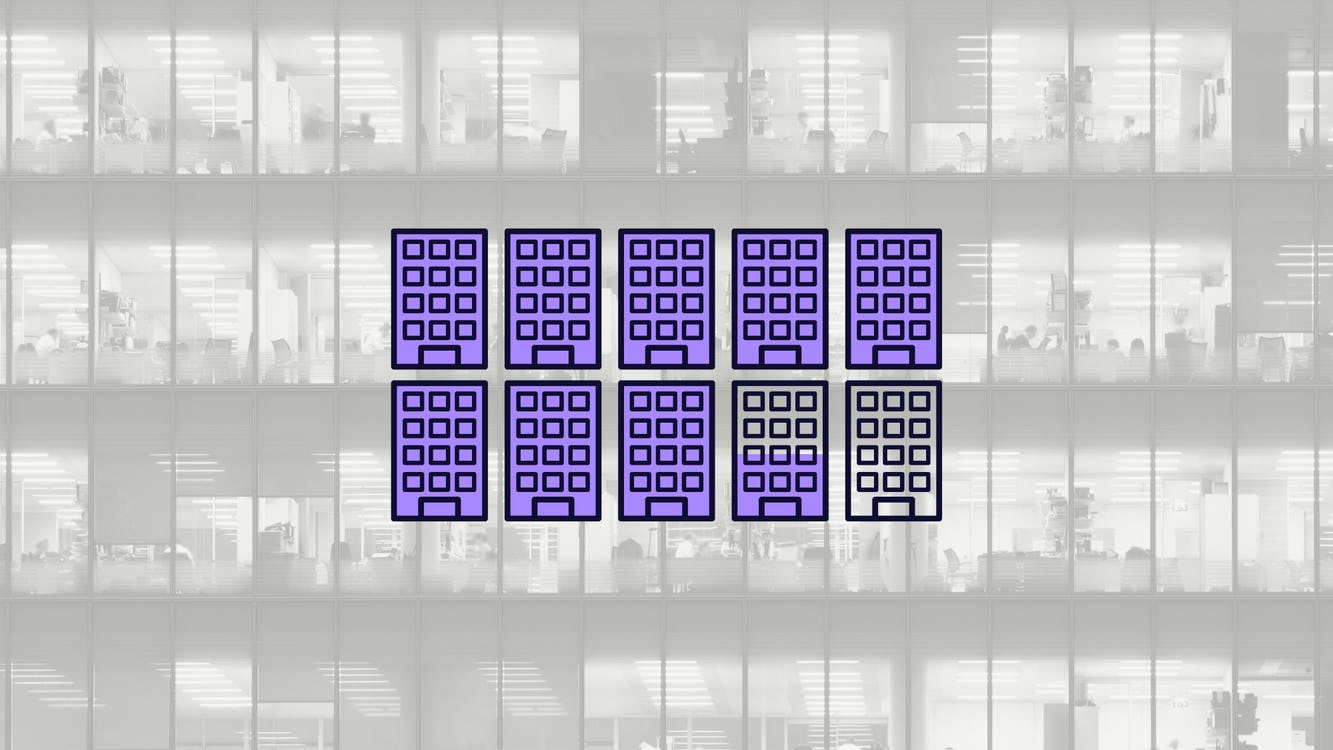




In today's workplaces, no two days look exactly the same. Some days feel calm and balanced. Others feel crowded, chaotic, or constrained—even at the same headcount.
Traditional planning tools struggle with this reality because they assume a single outcome: one breakpoint, one capacity number, one “answer.” But real offices don’t operate that way. They operate across a range of possible outcomes, shaped by human behavior and natural variability.
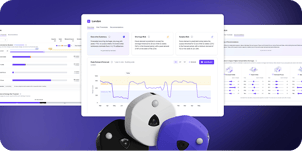
That’s why VergeSense’s Predictive Planning product uses Monte Carlo simulation on top of the proprietary Large Spatial Model, to move beyond single-point predictions and help teams understand how days could realistically unfold, not just what might happen in an idealized scenario.
Step 1: Predict the most likely way people distribute
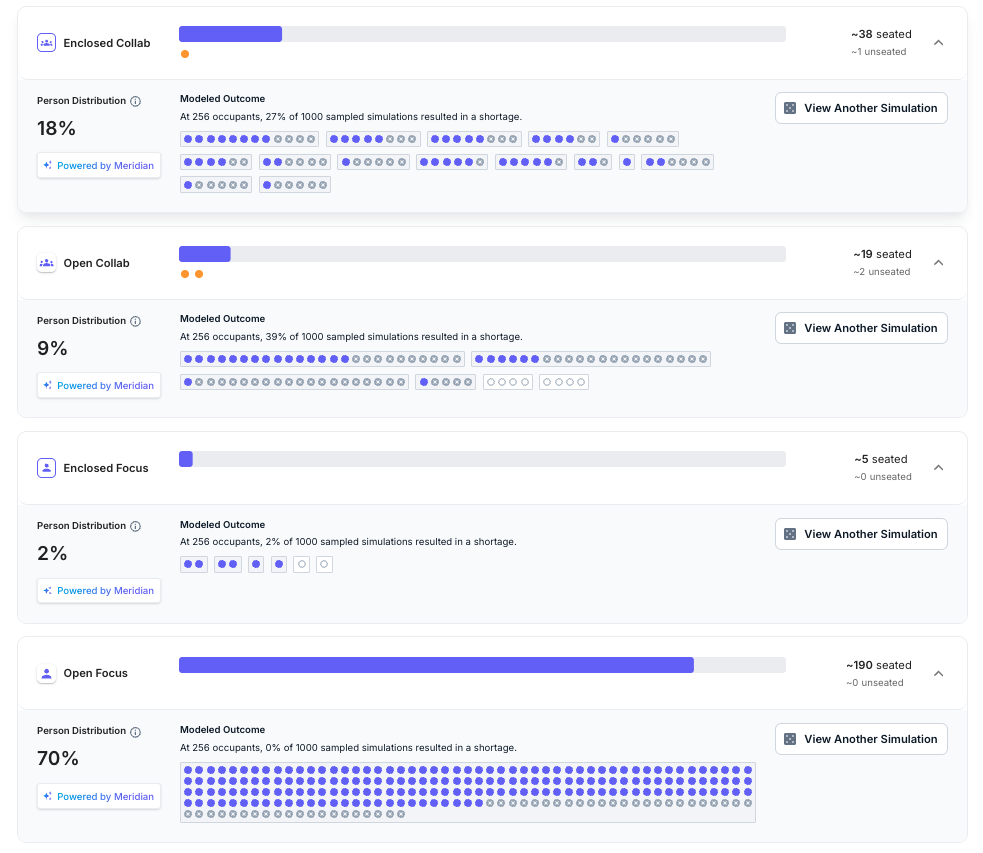
First, the model predicts how people are likely to spread across the office at a given headcount:
- What percentage go to desks, open collaboration, enclosed collaboration, focus rooms, etc.
- What typical meeting sizes look like for each room type
- Which rooms tend to fill first
At this stage, the output is probabilistic: it describes what usually happens, not a single rigid scenario.
Step 2: Introduce real-world variability
In reality, behavior isn’t perfectly consistent:
- Sometimes collaboration is 8% of people, sometimes it’s 10%
- Sometimes meetings are 4 people instead of 6
- Sometimes people choose different spaces than average
To account for this, the model incorporates known behavioral variance from VergeSense’s real-world data.
Step 3: Run 1,000 simulated “days”
The system then runs the model 1,000 times, each time slightly varying:
- How many people choose each type of space
- How meeting sizes distribute
- Which rooms are claimed first
Each run represents a plausible version of a real workday at that headcount. Think of it as asking:
“If we could replay this same day 1,000 times, what would realistically happen?”
Step 4: Aggregate outcomes into risk, not absolutes
Instead of saying:
“At 178 people, the office breaks.”
The Monte Carlo simulation lets us say:
- how often conference rooms are fully occupied
- how many people are likely unable to find the space they need
- which space types are the primary bottlenecks
- how severe the impact is as headcount increases
For example:
- At 252 people, ~26% of occupants are likely impacted by space shortages
- Enclosed collaboration spaces are the first and most critical bottleneck
- Open collaboration becomes strained next, but with lower preference impact
This turns a single “breakpoint” into a risk profile.
Step 5: Recommend an optimal capacity
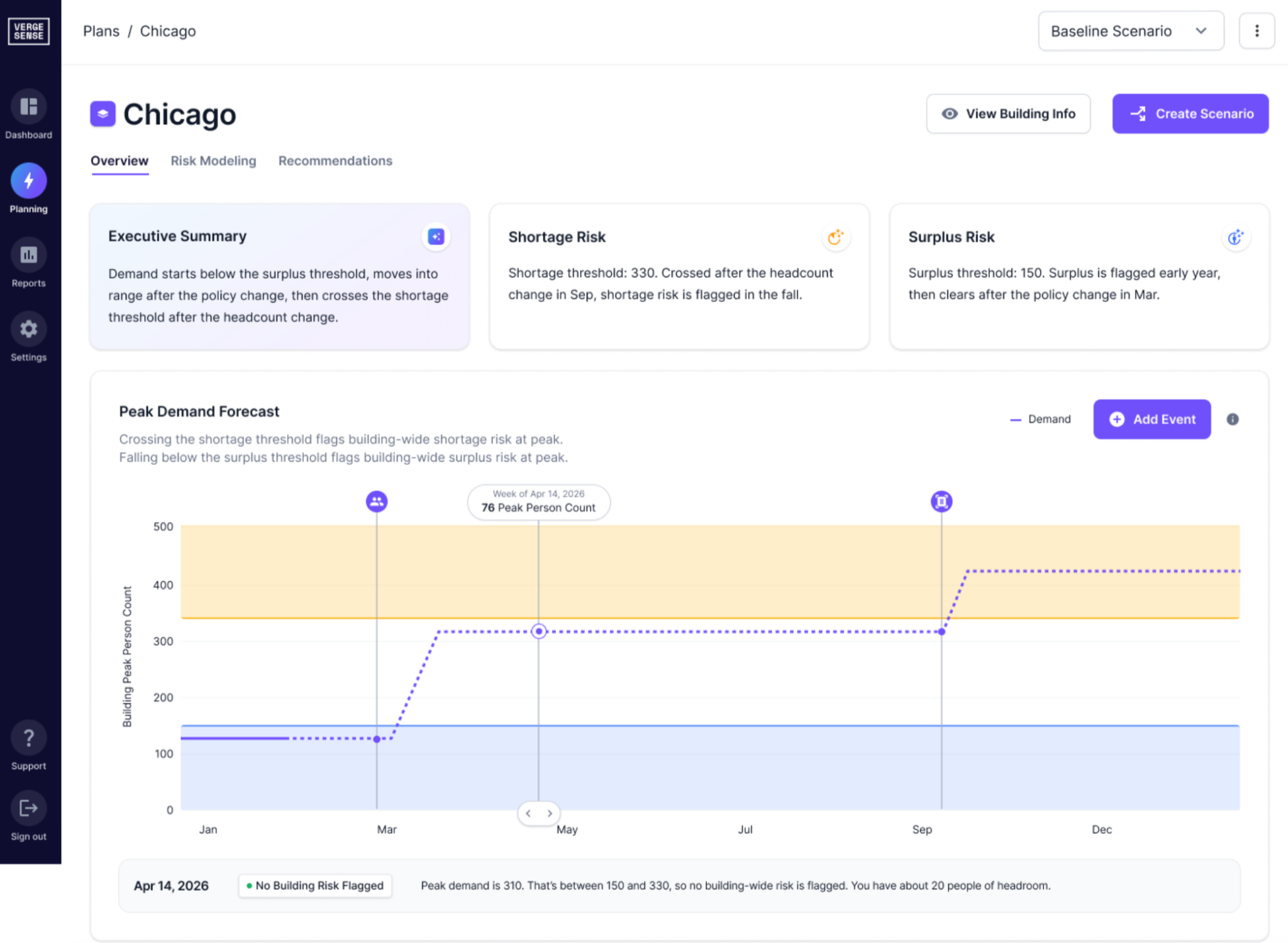
Rather than just flagging failure, the model recommends a healthy operating range.
Using the simulation results, VergeSense identifies a capacity where:
- shortages exist but are limited
- the office still feels vibrant
- space isn’t overbuilt or underutilized
For example: “At ~108 people, only ~3% of occupants are likely affected by space shortages — a balanced tradeoff between efficiency and experience.”
Wrapping Up
The power of Monte Carlo simulation isn’t in predicting a perfect future, it’s in revealing the risk profile of reality.
By modeling thousands of plausible workdays, Predictive Planning replaces rigid breakpoints with probabilistic insight. Teams don’t just see when an office might struggle—they see how often, why, and who is affected. That shift turns planning from reactive troubleshooting into proactive decision-making.
Instead of guessing where capacity fails, teams can design for resilience, vibrancy, and experience, balancing efficiency with the realities of human behavior.
In a world where workplace patterns change week to week, the ability to understand not just what could happen, but how likely it is to happen, is what turns data into confident action.